Tool Cabinets and Outdoor Kitchen Storage: An Overlooked Product Opportunity
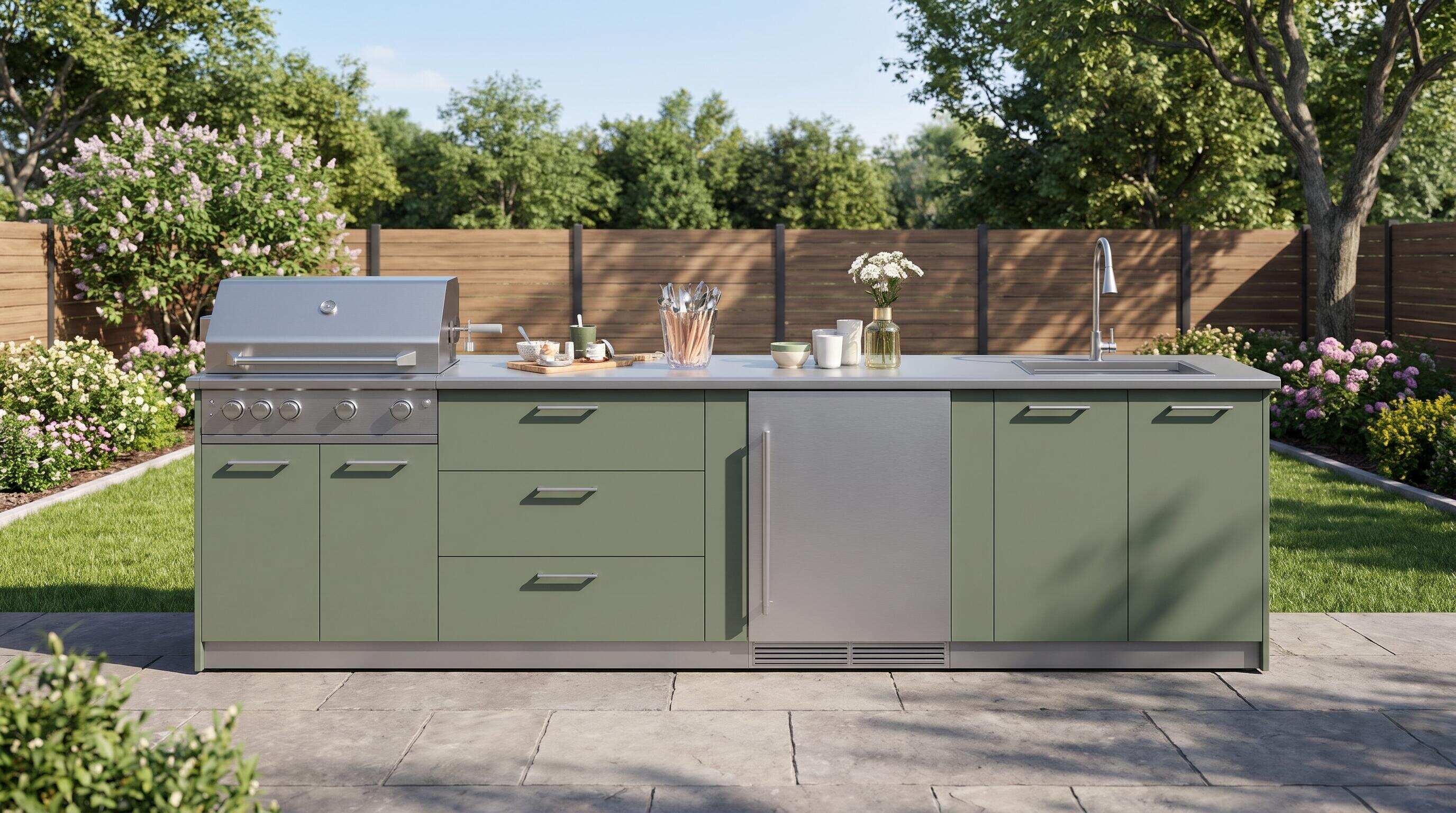
Why Outdoor Kitchen Storage Deserves a Place on Your Product Roadmap
Outdoor kitchen storage represents a potential product expansion opportunity for kitchen appliance distributors and outdoor living brands. As buyers develop more complete outdoor kitchen product portfolios, weather-resistant cabinets, drawer units, and modular storage systems can complement existing appliance offerings. While most importers and distributors concentrate their sourcing efforts on grills, cooktops, and built-in appliances, the supporting infrastructure of an outdoor kitchen — the cabinetry, the storage, the organizational framework — often goes overlooked. That gap is precisely where forward-thinking B2B buyers are finding margin and differentiation.
The thesis of this article is straightforward: outdoor kitchen storage and tool cabinets are not accessories; they are a core product category that is underrepresented in many distributors' portfolios, and buyers considering this category can begin by evaluating market demand, product positioning, and available manufacturing capabilities. Establishing suitable sourcing relationships early may help them prepare for future product expansion as their outdoor living portfolios develop.
The State of Outdoor Kitchen Storage: How the Category Arrived Here
The outdoor kitchen is a concept that is no longer confined to high-end residential construction projects or luxury hospitality installations. Over the past decade, the idea of a fully functional cooking and entertaining space outdoors has filtered steadily downmarket, moving from bespoke contractor builds to modular, consumer-assembled configurations. In some residential renovation and outdoor living projects, outdoor kitchens are increasingly considered as part of broader patio, landscaping, and entertaining space upgrades. Adoption varies by region, property type, climate, and project budget.
What has not kept pace with this expansion is the storage component. Walk through any trade show floor dedicated to outdoor living or kitchen products, and you will find dozens of vendors competing on grills, burners, side burners, and refrigeration. Outdoor kitchen storage may receive less attention than grills and cooking appliances in some product portfolios. For distributors evaluating category expansion, assessing the availability, pricing, and specifications of storage products in their target markets can help identify potential gaps in their existing offerings.
Outdoor kitchen cabinets may use materials such as stainless steel, powder-coated aluminum, marine-grade polymer, or high-density polyethylene (HDPE). Their suitability for exterior applications depends on material grade, surface treatment, product construction, and exposure conditions. Buyers should verify relevant performance specifications for the intended installation environment. This material requirement is what distinguishes outdoor cabinet manufacturing from standard indoor kitchen cabinetry, and it is what creates a meaningful barrier to entry — and a meaningful opportunity — for manufacturers and distributors who get the engineering right.
The tool cabinet segment, which includes rolling tool chests, wall-mounted storage panels, and heavy-duty drawer systems, is an adjacent category with strong overlap in both end use and manufacturing process. While tool cabinets designed for outdoor or semi-outdoor environments—such as garages, workshops, and covered patios—and outdoor kitchen cabinets both require weather-resistant construction, their specific material and coating requirements should be determined separately based on the actual installation environment and exposure conditions. Sourcing outdoor kitchen cabinets and related appliances through one coordinated supplier may simplify communication and order management. However, buyers should confirm which products are manufactured in-house, which are sourced from external partners, and how quality inspection and delivery responsibilities are allocated.
The global interest in outdoor living spaces, supported by ongoing residential construction and renovation activity across North America, Europe, and Australia, continues to generate sustained demand for products that can withstand the elements while delivering the aesthetic and functional standards of indoor spaces.
Why This Opportunity Is Being Missed: Root-Cause Analysis
Understanding why outdoor kitchen storage remains underserved requires examining the structural factors that make it a more complex sourcing decision than simply adding another SKU to a catalog.
Material Specification Complexity
The core engineering challenge of outdoor kitchen storage is material durability under multi-stressor conditions. Unlike indoor cabinetry, where wood and MDF are standard and cost-effective, outdoor cabinets must resist simultaneous exposure to moisture, UV, grease, and mechanical impact. Stainless steel — particularly Type 304 and Type 316 grades — is widely used for its corrosion resistance, but it requires precise finishing to prevent surface oxidation in coastal or high-humidity environments. Powder-coated aluminum is lighter and highly resistant to rust, making it a popular choice for modular systems. HDPE is one material option for outdoor storage applications because of its low water absorption, ease of cleaning, and availability in different colors. Buyers should also review the material grade, UV stabilization, structural design, and manufacturer specifications before selecting it for a particular outdoor environment.
The material decision cascades into every downstream specification: hinge selection, drawer slide rating, handle material, sealing systems, and ventilation for enclosed spaces housing refrigeration units. Material selection affects several related product specifications, including hinge selection, drawer slide capacity, handle materials, sealing systems, and ventilation design. Reviewing these components together during product development can help buyers balance functional requirements, manufacturing feasibility, and target cost.
Fragmented Sourcing Landscape
Fragmented sourcing is a structural barrier that pushes many buyers away from outdoor kitchen storage. Manufacturers may specialize in different areas, including kitchen appliances, furniture, metal fabrication, or architectural hardware. Buyers sourcing complete outdoor kitchen systems should therefore verify whether a potential supplier has the in-house production capabilities or qualified supply partners needed for each product category. A buyer accustomed to sourcing cooktops and rangetops from an appliance manufacturer may find that the same factory does not have the cabinet-making or metal fabrication capabilities to produce the storage units they need. This forces buyers to manage multiple factory relationships, complicating quality control, logistics, and lead time coordination.
One possible sourcing approach is to work with a manufacturer that produces both appliances and outdoor cabinets in-house. Another option is to work with a supplier that coordinates qualified manufacturing partners across product categories. Buyers should compare production responsibilities, quality control arrangements, communication processes, and logistics coordination before choosing either model. This is a capability distinction that buyers should explicitly evaluate when qualifying new suppliers.
Private-Label Positioning Gaps
Some outdoor living and kitchen appliance brands may focus primarily on grills and cooking equipment, while their storage product offerings vary by market and brand strategy. For distributors developing a private-label portfolio, outdoor cabinets and storage systems may provide an additional opportunity to expand product coverage and create a more coordinated product range. Outdoor kitchen storage cabinets are visible components of an outdoor kitchen installation and can contribute to the overall appearance and functionality of a product range. Their commercial value depends on material selection, manufacturing costs, product positioning, and the target sales channel. When every appliance in an outdoor kitchen bears a brand's logo but the cabinets come from a generic source, the brand experience is fragmented. For buyers building a private-label kitchen appliance line, extending that brand identity into the storage and cabinetry components is a natural and commercially logical next step.
Certification and Compliance Considerations
Outdoor kitchen products sold in regulated markets — particularly North America — must meet specific safety and durability standards. Outdoor kitchen storage cabinets may be subject to product safety, material, coating, and structural requirements depending on the destination market, product design, and intended application. Unlike powered kitchen appliances, passive storage cabinets may not fall under the same appliance-specific certification schemes. Buyers should verify applicable local regulations, retailer requirements, and material specifications for each product and market. Buyers who have invested in understanding kitchen appliance safety certifications for North American importers will find that the same diligence applies when qualifying outdoor cabinet suppliers.
Evidence and Multi-Angle Comparison: Approaches to Entering the Category
The outdoor kitchen storage opportunity can be pursued through several distinct business models, each with different risk profiles, capital requirements, and time-to-market characteristics. Understanding the trade-offs helps buyers select the approach that best fits their existing infrastructure and growth objectives.
| Perspective / Approach | Strengths | Trade-offs | Best Fit |
|---|---|---|---|
| OEM (Buyer's Design, Manufacturer's Production) | Greater involvement in defining product design, dimensions, and branding, subject to technical feasibility and agreed intellectual property arrangements. | Requires clearer technical specifications and development coordination. Tooling, sampling, and validation requirements may affect the project timeline. | Buyers with defined product specifications and a need for greater design involvement |
| ODM (Manufacturer's Design, Buyer's Brand) | Using an existing product platform may reduce certain design and development requirements, depending on the level of customization. | Product differentiation may be more limited if multiple buyers use similar base designs. Branding, customization scope, and applicable design rights should be clarified in the agreement. | Buyers seeking to evaluate existing product platforms and develop branded offerings |
| Modular Kit Sourcing | Allows buyers to select different components and build product assortments according to market needs. | Buyers may need to coordinate dimensions, finishes, interfaces, and quality acceptance criteria across different suppliers and components. MOQ depends on supplier and product requirements. | Buyers building assortments from components supplied by different manufacturers |
| Full Outdoor Kitchen System (Appliances + Storage) | Allows buyers to develop a coordinated product offering covering outdoor appliances and storage components. | Requires coordination across product specifications, manufacturing responsibilities, quality inspections, and logistics arrangements. | Buyers seeking coordinated sourcing for multiple outdoor kitchen product categories |
For buyers entering the outdoor kitchen storage category, the ODM model can provide an alternative to developing a completely new product design. Using an existing product platform may reduce certain initial development requirements and allow buyers to focus on branding, market evaluation, and product selection. However, sales performance and product quality depend on market demand, product specifications, supplier capabilities, and quality validation. The ODM approach allows a buyer to validate the market, establish distributor relationships, and develop category-specific product knowledge before investing in proprietary design development.
Innovative storage solutions for outdoor kitchens, as documented by outdoor living specialists, increasingly include features such as pull-out trash and recycling systems, integrated paper towel holders, bottom cabinets for propane tank storage (which must be properly ventilated and installed in accordance with specific appliance and local requirements), and modular corner units that maximize use of otherwise dead space. Depending on the product design and target market, outdoor kitchen storage systems may incorporate features such as pull-out waste bins, integrated paper towel holders, designated propane tank compartments, and modular corner units. Buyers should confirm the availability, compatibility, and installation requirements of each feature with the manufacturer.
When evaluating outdoor kitchen cabinets, buyers may consider door sealing design, hinge performance, surface finish durability, and resistance to environmental exposure. The importance of each specification depends on the intended installation environment and product design. Relevant performance claims should be supported by manufacturer specifications or test results. These are specifications that should be explicitly confirmed during supplier qualification, not assumed.
Understanding whether OEM or ODM is the right manufacturing model is a foundational decision for any buyer entering this category. The choice between OEM and ODM affects the level of design involvement, customization scope, tooling requirements, and allocation of development responsibilities. These factors may influence the project schedule and the ongoing cooperation arrangements between the buyer and manufacturer. Buyers who want a deeper framework for making this decision can find a systematic comparison in our guide on OEM vs. ODM for kitchen appliances, which outlines the considerations that apply directly to categories like outdoor storage.
Outlook and What It Means for B2B Buyers
Outdoor kitchen storage and tool cabinets may offer additional product opportunities for kitchen appliance distributors and outdoor living brands. Buyers can evaluate whether these categories align with their existing customer base, regional market demand, and product portfolio strategy. Interest in outdoor living and residential renovation varies across North America, Europe, Australia, and other regional markets. Buyers should evaluate local construction activity, consumer preferences, climate conditions, and distribution channel requirements when assessing the potential of outdoor kitchen storage products.
For B2B buyers, the most important implication is timing. The window in which outdoor kitchen storage can be positioned as a differentiating product — rather than a commodity that every competitor carries — is not indefinite. Developing product knowledge, evaluating manufacturing partners, and identifying suitable market positioning can help buyers prepare for potential category expansion. The timing and commercial benefits of entering this segment will depend on regional demand, competition, and product differentiation.
The practical takeaways from this analysis are:
- Evaluate your current outdoor kitchen or outdoor living portfolio for storage gaps — specifically, whether the brands and products you carry or represent offer a coherent, weather-rated storage solution alongside their appliances.
- Qualify manufacturing partners not only on appliance capability but on their ability to produce or coordinate outdoor cabinet and storage products to consistent standards — material, finish, and hardware specification should all be explicitly confirmed.
- Consider the ODM entry path as a low-risk way to establish category presence while developing the market knowledge needed to invest in proprietary designs.
- Outdoor kitchen cabinets and storage systems contribute to the overall appearance, organization, and functionality of an installation. For brands developing a coordinated outdoor kitchen portfolio, extending branding across appliances and storage components may help create a more consistent product presentation.
The category rewards early movers who invest in supplier quality and product specification. Buyers who treat outdoor kitchen storage as an afterthought will find themselves reactive as the market develops; those who treat it as a core category will be better equipped to capture the margin and customer loyalty it offers.
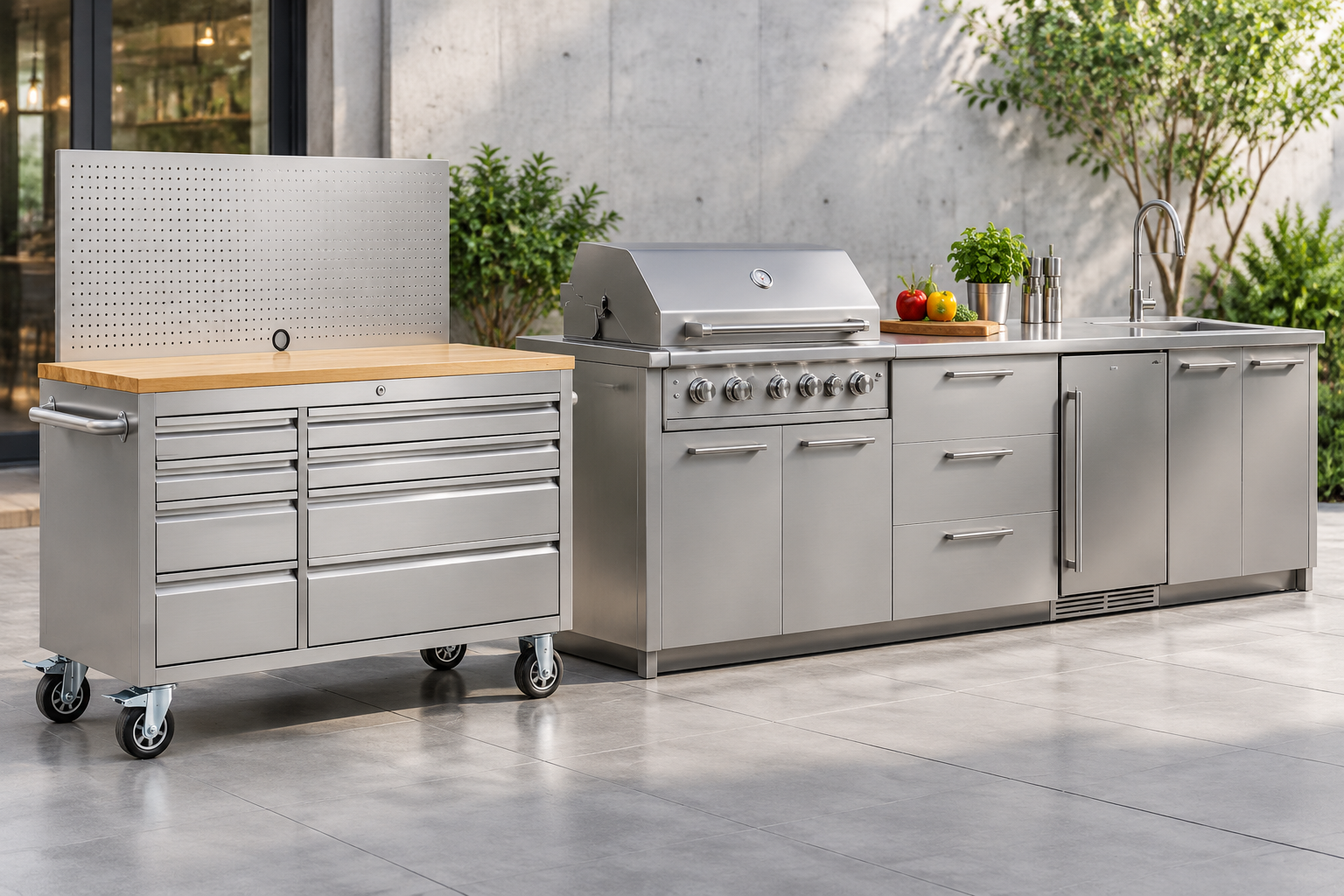
ALT: Stainless steel outdoor kitchen cabinets and weather-resistant tool storage for B2B sourcing and OEM manufacturing
Frequently Asked Questions FAQ
Q1: How should a B2B buyer evaluate the weather resistance of outdoor kitchen cabinets before placing a large order?
Surface treatment: Review the coating type, specified coating thickness where applicable, surface preparation process, and available corrosion or UV exposure test results. The relevant test methods and acceptance criteria should be selected according to the material, finish, and intended installation environment. Requesting physical samples and reviewing the manufacturer's internal quality testing documentation before committing to volume is standard practice in the category. Buyers should request relevant material specifications, available test reports, and quality inspection records from the manufacturer. The availability and scope of supporting documentation should be confirmed before placing a bulk order.
Q2: Are outdoor kitchen storage cabinets subject to the same certification requirements as kitchen appliances in North American markets?
Passive outdoor kitchen storage cabinets generally follow different compliance considerations from powered kitchen appliances. Applicable requirements depend on the product's construction, intended use, materials, and destination market. Buyers should verify whether any specific product standards, retailer requirements, or local regulations apply before importing or distributing the cabinets. However, they may be subject to material safety requirements, structural performance expectations set by retailers or builders, and in some jurisdictions, specific regulations for products used in food preparation environments. Buyers should confirm compliance requirements with their target retail or distribution channel and consult the relevant regulatory bodies in their destination market. A manufacturer with experience in supplying outdoor appliances and storage products may be familiar with some of the documentation and product requirements involved in different markets. Buyers should still verify compliance for each product, model, and destination market independently.
Q3: How long does it typically take to bring a private-label outdoor kitchen storage line to market through an ODM manufacturer?
Lead time for a private-label outdoor kitchen storage line through an ODM manufacturer varies based on the degree of customization required. Products based on an existing ODM platform may require fewer design development steps than fully customized products. However, custom colors, hardware changes, tooling modifications, sample approval, testing, and production planning can all affect the actual project schedule. Buyers should confirm the required development stages and timeline with the manufacturer. Buyers seeking a realistic project timeline should discuss their specific requirements directly with their manufacturing partner, factoring in sample approval, compliance review, and logistics lead time. Engaging the manufacturer early can help clarify product specifications, customization requirements, and project responsibilities before development begins. This preparation may reduce avoidable coordination issues, although the actual time to first shipment depends on the project scope and production conditions.
Wrapping Up
Outdoor kitchen storage and tool cabinets offer potential product expansion opportunities for distributors and outdoor living brands. Their suitability depends on regional demand, competitive offerings, product specifications, material requirements, and the availability of qualified manufacturing partners across target markets. Three core points define the opportunity:
First, outdoor kitchen storage may represent a potential product expansion opportunity for distributors and importers. Buyers can evaluate whether their current product portfolios have gaps in this category by reviewing local market demand, competing product availability, and customer feedback. This assessment can help determine whether adding weather-resistant outdoor storage solutions would complement their existing appliance and outdoor living offerings.
Second, the manufacturing complexity that makes the category challenging to enter is also the barrier that creates sustained differentiation for buyers who invest in qualifying the right production partners.
Third, the ODM model can provide buyers with an alternative to developing a completely new product design. By evaluating existing product platforms, buyers can assess market suitability and customization requirements before deciding whether further investment in proprietary product development is appropriate.
Buyers can begin by evaluating OEM/ODM manufacturers with relevant experience in outdoor appliances and storage products. During supplier qualification, verify which products are manufactured in-house, which involve external partners, and how material specifications, inspection procedures, and quality acceptance criteria are managed across the product range.
Looking for outdoor kitchen cabinet and storage solutions for your product portfolio?Contact Hyxion to discuss available product options, material specifications, customization requirements, and potential OEM/ODM cooperation arrangements. The team can help evaluate suitable solutions based on your target market and project needs.Visit the Hyxion website to browse product catalogs, request a custom quote, or connect with the B2B partnership team to discuss your sourcing requirements.
Sources
- Outdoor Kitchen Storage. "Outdoor Kitchen Storage."
https://www.youtube.com/watch?v=1bcWcc97XaY - 12 Best Outdoor Kitchen Storage Ideas That Last. "12 Best Outdoor Kitchen Storage Ideas That Last."
https://serenecabinetry.com/blogs/news/best-outdoor-kitchen-storage-ideas?srsltid=AYCX9vIMFQBET5krKjWTvxCC86MpWKZ3vTnc79FGoY3AGbdh7UxxLprK - Innovative Storage Solutions for Small Outdoor Kitchens. "Innovative Storage Solutions for Small Outdoor Kitchens."
https://werever.com/innovative-storage-solutions-for-small-outdoor-kitchens/
Note: Standards may be updated; please check the latest official documents or consult professional advisors.