
Outdoor Kitchen Appliances: A Growth Category for Distributors in 2026
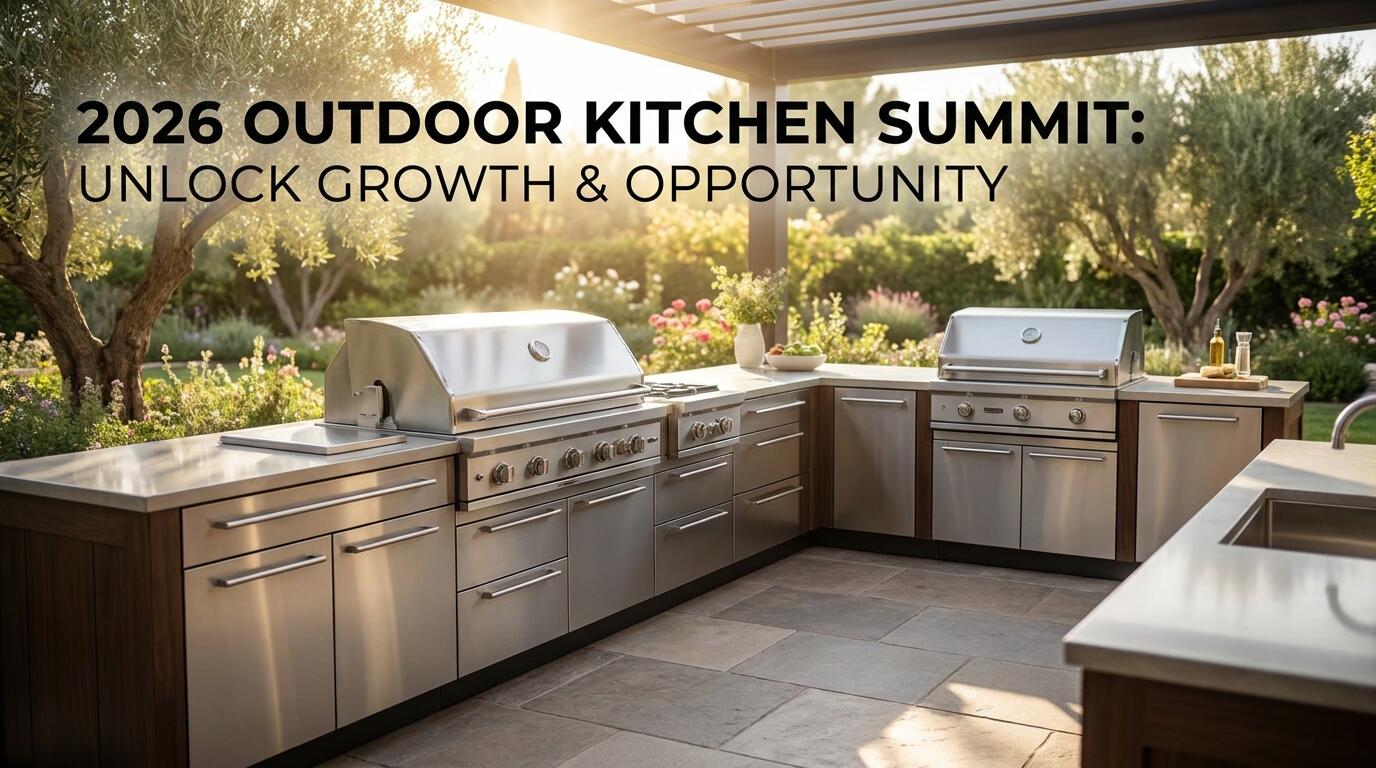
ALT: Outdoor kitchen appliances displayed in a modern backyard setting, showcasing growth opportunities for B2B distributors in 2026
Why Outdoor Kitchen Appliances Are Becoming a Priority Category for Global Distributors
Consider this illustrative scenario: A purchasing manager at a regional appliance distributor is evaluating whether to expand the company's product portfolio into outdoor kitchen appliances. The decision involves more than selecting individual products. It requires assessing product demand, supplier capabilities, product configurations, and the needs of the distributor's target customers. A procurement manager sourcing for a mid-sized appliance retail chain notices something unexpected: the fastest-moving SKUs in a recent catalog refresh are not the premium indoor ranges or the smart ovens — they are outdoor cooking stations, weather-resistant cooktops, and modular kitchen cabinets designed for patios and backyard spaces. Outdoor kitchen appliances are attracting attention from distributors looking to expand beyond traditional indoor cooking products. Interest in outdoor living spaces, modular kitchen configurations, and weather-resistant cooking equipment creates opportunities for businesses evaluating this category. However, market demand and growth potential vary by region, customer segment, and product positioning. Distributors should assess local purchasing trends and competitive conditions before committing to a new product line.
This article examines why the outdoor kitchen appliance segment is expanding, how distributors can evaluate sourcing and product development opportunities, and what manufacturing considerations — including OEM/ODM customization — make a tangible difference in bringing competitive products to market efficiently.
Who This Article Is For and When It Applies
Applicable Scenarios:
- Distributors and importers actively looking to expand their kitchen appliance portfolio with outdoor-specific product lines
- Private-label brands evaluating OEM/ODM manufacturing partnerships to develop customized outdoor kitchen products
- Retailers sourcing weather-resistant appliances — cooktops, ranges, outdoor cabinet systems — for the premium outdoor living market
- Procurement managers benchmarking factory capabilities and customization options ahead of a 2026 product launch
Not Applicable/Cautions:
- Businesses focused exclusively on commercial foodservice equipment (outdoor residential appliances operate under different certification and design standards)
- Distributors seeking finished-goods wholesale without any customization need — the OEM/ODM model discussed here is most relevant when brand differentiation matters
The Outdoor Kitchen Category: Market Context and What Is Driving Demand
Outdoor kitchen appliances are purpose-built cooking and food preparation products engineered for open-air installation, typically featuring weather-resistant construction, durable material finishes, and configurations suited to built-in or modular outdoor cabinet systems. The category spans gas and induction cooktops, rangetops, freestanding or drop-in ovens, and complementary infrastructure such as stainless-steel outdoor cabinet enclosures.
Several converging trends are driving distributor interest in this segment heading into 2026.
First, interest in outdoor living and home entertainment has created opportunities for outdoor kitchen products in several international markets. However, purchasing behavior and spending levels differ across regions and customer segments. Distributors should evaluate local demand, residential installation trends, and target price ranges when deciding how to position an outdoor kitchen product line.
Second, the product category has matured technically. Early outdoor appliances were often indoor products with minimal weatherproofing — a compromise that generated warranty problems and customer dissatisfaction. Outdoor appliances should be designed with their intended installation environment in mind. Relevant considerations may include enclosure protection for electrical components, corrosion resistance of exposed materials, UV stability of exterior finishes, and operating conditions across different temperatures. The appropriate specifications depend on the product type, installation location, and environmental exposure. Buyers should review the manufacturer's material specifications and supporting test information for each model.
Third, the modular cabinet-and-appliance system model has lowered the installation barrier for consumers. Rather than requiring full custom construction, modular outdoor kitchen cabinets allow homeowners and contractors to assemble complete outdoor kitchens from pre-engineered components. For distributors, this means a higher average order value — selling an integrated system rather than a single appliance unit — and stronger brand attachment when the system carries a consistent private label.
From a sourcing standpoint, the expansion of outdoor kitchen appliances as a category aligns directly with the capabilities of experienced OEM/ODM manufacturers. Customization of finishes, burner configurations, control panel layouts, and cabinet dimensions is where factory-direct manufacturing partnerships create a genuine competitive advantage over buying commoditized goods through trading companies.
Building a Competitive Outdoor Kitchen Product Line: A Practical Framework
Three-Step Quick Start for Distributors Entering the Category
Step 1: Define Your Target Segment and Core SKU Set
Before approaching a manufacturing partner, clarify which price tier and customer profile you are targeting — entry-level DIY outdoor kitchen buyers, mid-market outdoor living enthusiasts, or premium built-in kitchen installers. This segmentation determines the material specifications, feature set, and certifications required. For an initial product launch, distributors may benefit from prioritizing a manageable group of core SKUs that match their target customers and available resources. The appropriate product mix depends on market demand, production capacity, inventory planning, and the complexity of each product. Starting with a clearly defined product scope can also make supplier coordination and quality control easier to manage. Allow adequate lead time for tooling and certification processes.
Step 2: Evaluate OEM/ODM Manufacturer Capabilities Against Outdoor-Specific Requirements
Not all appliance manufacturers have genuine outdoor product experience. During factory evaluation, buyers should assess the manufacturer's experience with outdoor product design, material selection, environmental protection requirements, and destination-market compliance. Ask which engineering and testing activities are handled in-house, which are supported by external partners, and what documentation is available for the specific product category. When evaluating a manufacturer's capabilities, buyers should verify the compliance documentation available for each specific product model. Check whether the relevant certification or conformity documents cover the exact model, configuration, and intended destination market. Do not assume that a manufacturer's general certifications automatically apply to every product in its range. Understanding the difference between OEM and ODM models is also critical at this stage: if your brand requires original industrial design or unique product configurations, an ODM arrangement may provide more opportunities for product customization. However, ownership of design files, tooling, firmware, and newly developed intellectual property depends on the contractual agreement. Buyers should clarify these rights, along with any product exclusivity arrangements, before starting development. The OEM vs. ODM distinction for kitchen appliances is a decision that shapes both your upfront investment and your long-term brand differentiation.
Step 3: Structure the Commercial and Logistics Framework Before Sampling
Many distributors enter sampling processes without a clear view of MOQ expectations, tooling fee structures, incoterms, and lead times. Before sampling, buyers should clarify the expected MOQ, tooling requirements, sample approval process, payment terms, Incoterms, and estimated production arrangements. The overall project schedule should also account for material availability, customization scope, testing requirements, production capacity, packaging validation, and destination-specific shipping arrangements. Actual milestones should be confirmed with the manufacturer based on the agreed product specifications and order conditions. For outdoor kitchen cabinets specifically, dimensional tolerances and packaging engineering are critical — these are heavy, dimensional products where shipping damage can materially affect landed cost economics. Work with your factory partner to review export packaging standards and confirm their experience shipping to your target market.
Comparing Sourcing Approaches for Outdoor Kitchen Appliances
Distributors typically evaluate three models when entering or expanding in the outdoor kitchen category. Each involves different trade-offs in cost structure, brand control, and time-to-market.
| Comparison Dimension | Branded Import (Finished Goods) | OEM Private Label | ODM Original Design |
|---|---|---|---|
| Brand control | Low — selling another brand's product | Brand identity applied to an agreed product specification | Greater scope for product-level differentiation |
| Upfront investment | Minimal tooling cost | Moderate (tooling for logo/branding) | Higher (design and tooling fees) |
| Customization flexibility | None | Depends on the existing product platform and agreed changes | Depends on design scope and engineering resources |
| Margin potential | Lower (competing on price) | Depends on pricing, volume, and market positioning | Depends on development investment, pricing, and market acceptance |
| Time to first shipment | Fastest | Depends on existing product readiness and customization scope | Depends on design development, tooling, testing, and approval requirements |
| Manufacturer dependency | High | Moderate | Depends on the contractual agreement covering IP ownership, usage rights, and transfer conditions |
| Best suited for | Testing demand with low commitment | Scaling a known-category product | Building a defensible product portfolio |
For distributors planning to build a long-term outdoor kitchen product portfolio, ODM development may offer greater flexibility in product differentiation. However, the commercial value of this approach depends on development costs, tooling investment, production volume, pricing strategy, and market acceptance. Buyers should evaluate the expected investment and business objectives before selecting a sourcing model. The potential to recover initial design and tooling costs depends on sales volume, pricing strategy, profit margins, and actual development expenses. Buyers should assess these factors when evaluating the commercial viability of an ODM investment.
Outdoor Kitchen Appliance Categories and What Distributors Should Know About Each
Rangetops and Cooktops for Outdoor Installation
Outdoor rangetops and cooktops may be exposed to wind, moisture, and temperature variations that differ from typical indoor operating conditions. When evaluating a manufacturing partner, buyers should review the burner design, ignition configuration, and available performance test information for the specific model. Where outdoor wind exposure is a concern, ask whether the product has been evaluated under relevant operating conditions and what limitations apply.
Built-In Ovens for Outdoor Kitchens
Outdoor built-in ovens occupy the premium tier of the category and require the most rigorous engineering. Thermal management, door seal integrity, and ventilation design are all more complex in outdoor environments. For distributors targeting premium buyers, adding an outdoor built-in oven can broaden the product assortment and provide another option for customers planning a more complete outdoor kitchen. Its contribution to average transaction value depends on product positioning, pricing, customer preferences, and the availability of compatible cabinet configurations.
Outdoor Kitchen Cabinets as a System Anchor
Outdoor kitchen cabinets may use stainless steel or other materials selected for their intended installation environment. Material selection should account for moisture exposure, salt exposure, temperature variation, surface treatment, and maintenance requirements. Buyers should confirm the specific material grade, finish, structural configuration, and available corrosion-resistance test data for the proposed cabinet system. A well-planned outdoor kitchen appliance portfolio can create additional cross-selling opportunities by allowing distributors to offer complementary products that address different customer needs. By combining core cooking appliances with suitable outdoor kitchen accessories and related products, distributors can build a more comprehensive product offering and serve a broader range of purchasing requirements. However, its impact on order value, margins, and repeat purchases depends on customer demand, pricing, product compatibility, and the distributor's sales strategy. The cabinet component also drives stronger brand identity, since the installed outdoor kitchen is visually dominated by the cabinet aesthetic.
Certifications and Compliance for Outdoor Products
Outdoor kitchen appliances face a distinct certification landscape compared to indoor counterparts.For North American markets, buyers should identify the applicable gas appliance and electrical safety requirements for each product category and destination country. Depending on the product type and market, relevant standards and certification requirements may differ between the United States and Canada. Where third-party certification or listing is required, verify that the documentation covers the exact product model, configuration, and intended installation conditions. Gas and electrical compliance should be reviewed separately where applicable. For products containing electrical controls or other exposed electrical components, buyers should determine whether an ingress protection rating is relevant to the intended installation environment. Any specified IP rating should be supported by applicable test documentation and should not be treated as a substitute for product safety certification or broader environmental durability evaluation. The required protection level depends on the product design and installation conditions. Distributors should verify that their manufacturing partner has established relationships with accredited testing laboratories and experience managing certification processes for outdoor-rated products. A manufacturer with relevant internal testing resources may be able to identify certain product issues before formal certification activities begin. However, internal testing does not replace any required evaluation by an authorized certification body or testing organization. The overall compliance schedule depends on the product configuration, applicable requirements, sample readiness, test results, and external assessment arrangements. For a detailed breakdown of relevant certification frameworks, the 2026 guide to kitchen appliance safety certifications for North American importers provides a structured reference point.
Advanced Considerations for Distributors Scaling Outdoor Kitchen Lines
Managing Seasonality in Order Planning
Outdoor kitchen appliances exhibit more pronounced demand seasonality than indoor products in most markets — particularly in North America and Northern Europe, where the outdoor cooking season is concentrated in spring and summer months. Distributors who do not account for this in their production scheduling risk either stockouts during peak demand or excess inventory carrying costs through the off-season. Work with your manufacturing partner to establish a production calendar that allows adequate buffer stock without overcommitting capital. Factories with proven capacity planning capabilities — and transparent lead time communication — are significantly easier to work with across seasonal cycles.
The Misconception That Outdoor Means Lower Technology
A common misconception among distributors new to the outdoor kitchen category is that outdoor appliances are simpler products requiring less sophisticated manufacturing. In practice, the opposite is often true: producing a rangetop or cooktop that performs reliably across extreme temperature ranges, humidity exposure, and UV degradation requires more careful material engineering and quality control than an equivalent indoor unit. This is a reason why the outdoor kitchen segment is better suited to experienced OEM/ODM manufacturers with real engineering capability rather than trading companies reselling commodity hardware.
Integrating Smart Features in Outdoor Appliances
Smart feature capabilities should be evaluated at the individual model level rather than ranked uniformly by fuel type. Buyers should compare the control systems, temperature monitoring capabilities, connectivity options, and compatibility with smart home platforms available on each model. Feature availability depends on the product's electronic architecture, software requirements, and intended operating environment. Technical feasibility and any additional testing or compliance requirements should be confirmed before finalizing the product specification. Distributors targeting early-adopter buyers in this segment should discuss smart feature integration options with manufacturing partners early in the product development process, as these features require additional electronic component sourcing and may affect certification pathways.
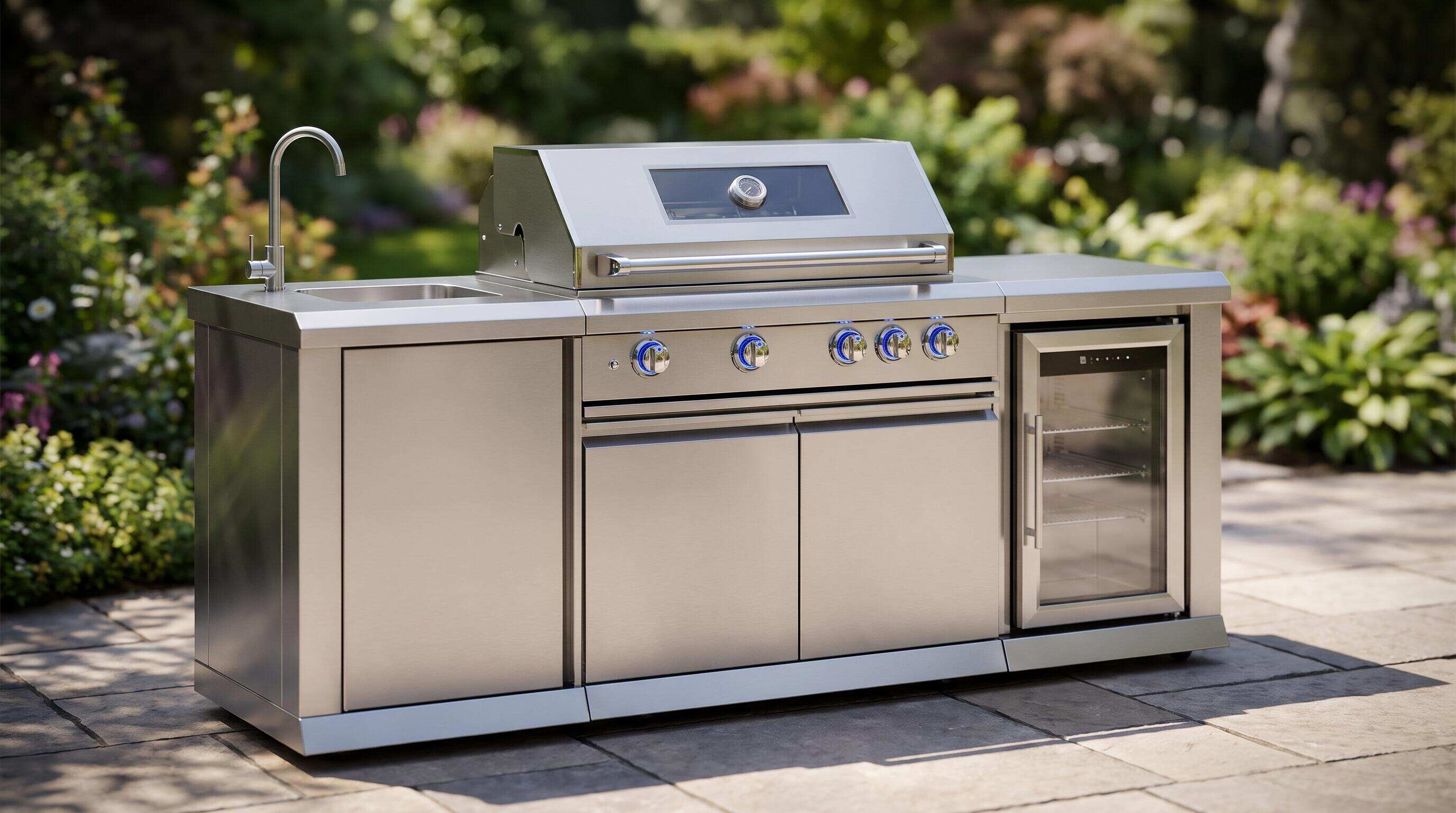
ALT: Modular outdoor kitchen cabinet system with built-in cooktop and rangetop appliances, illustrating OEM/ODM customization options for B2B distributors sourcing outdoor kitchen products
Common Questions
Q1: How should a distributor evaluate whether a manufacturer genuinely has outdoor kitchen product experience?
Request documentation of previous outdoor-specific product builds — including material specifications for external surfaces, evidence of weatherproofing engineering, and any certification records for outdoor-rated products. Ask for samples from existing outdoor product lines and conduct your own accelerated weathering assessment. When reviewing a manufacturer's outdoor product experience, ask for model-specific information about burner design, ignition performance, material selection, and cabinet construction. Where wind exposure or thermal expansion is relevant, request supporting engineering documentation or test results that demonstrate how these factors are addressed in the proposed product configuration.
Q2: Are outdoor kitchen appliances subject to different safety certifications than indoor appliances?
The applicable safety and compliance requirements depend on the appliance type, intended installation environment, and destination market. Outdoor gas appliances and products containing electrical components may be subject to specific standards or additional evaluation requirements based on their design and intended use.
For North American markets, buyers should verify the relevant requirements for the specific product and destination country. Where certification or listing is required, confirm that the documentation covers the exact model and outdoor installation configuration. For electrical components exposed to moisture or dust, determine whether an appropriate enclosure protection rating is also required. IP ratings and product safety certification address different aspects of product evaluation and should be reviewed separately.
Q3: What is a realistic timeline for launching a private-label outdoor kitchen product line from initial sourcing contact to first shipment?
Timeline varies considerably based on customization depth, certification requirements, and factory capacity. An OEM private-label program with surface branding on an existing outdoor product platform can move more quickly than a fully original ODM design. Certification processes for new product configurations — particularly for gas appliances requiring UL or CSA review — add lead time that must be built into the project plan. Beginning sourcing conversations well in advance of your target market launch date, and aligning with a factory that has existing outdoor product certification infrastructure, produces the most predictable timelines.
Final Thoughts
Outdoor kitchen appliances represent one of the more durable growth opportunities in the broader kitchen appliance distribution market heading into 2026 — driven by sustained consumer investment in outdoor living, technical maturation of the product category, and the value of modular cabinet-and-appliance system selling.
Key Takeaways:
- The outdoor kitchen segment has matured beyond niche luxury into a scalable mid-market category with meaningful volume potential for distributors who position early.
- Compliance requirements for outdoor appliances depend on product type, design, intended installation conditions, and destination market. Working with a manufacturer familiar with the relevant product requirements can help buyers identify documentation needs and plan compliance activities more effectively. However, certification scope and project timelines should be confirmed for each specific model.
- Outdoor kitchen cabinets serve as a system anchor that increases average order value and drives stronger brand identity compared to standalone appliance SKUs.
- Certification requirements for outdoor appliances are distinct from indoor equivalents; working with a manufacturer experienced in outdoor-specific certification pathways reduces time-to-market risk.
- Seasonal demand patterns in key markets require proactive production scheduling aligned with an experienced factory partner.
Distributors ready to act on this opportunity should prioritize identifying manufacturing partners with verified outdoor product development experience, transparent certification capabilities, and the OEM/ODM flexibility to support a branded product strategy. That evaluation process starts with direct factory engagement — the sooner sourcing conversations begin, the more options remain on the table for 2026 launch timing. For distributors who want a structured framework for that evaluation, reviewing how to choose an OEM/ODM kitchen appliance manufacturer is a practical next step before entering factory conversations.
Ready to build a competitive outdoor kitchen appliance line under your own brand? Visit Hyxion's website to explore the full range of outdoor kitchen products — including rangetops, cooktops, built-in ovens, and modular outdoor cabinet systems — request a custom quote, or connect directly with the Hyxion team to discuss your OEM/ODM sourcing requirements.
Sources
- U.S. Consumer Product Safety Commission. "Outdoor Cooking Safety and Appliance Regulations".
https://www.cpsc.gov - CSA Group. "Standards for Outdoor Gas Appliances and Installation".
https://www.csagroup.org - UL Standards & Engagement. "Safety Certification Standards for Outdoor Appliances".
https://www.ul.com
Note: Standards may be updated; please check the latest official documents or consult professional advisors.