
Electric vs. Gas Wall Ovens: Sourcing Considerations for Global Markets
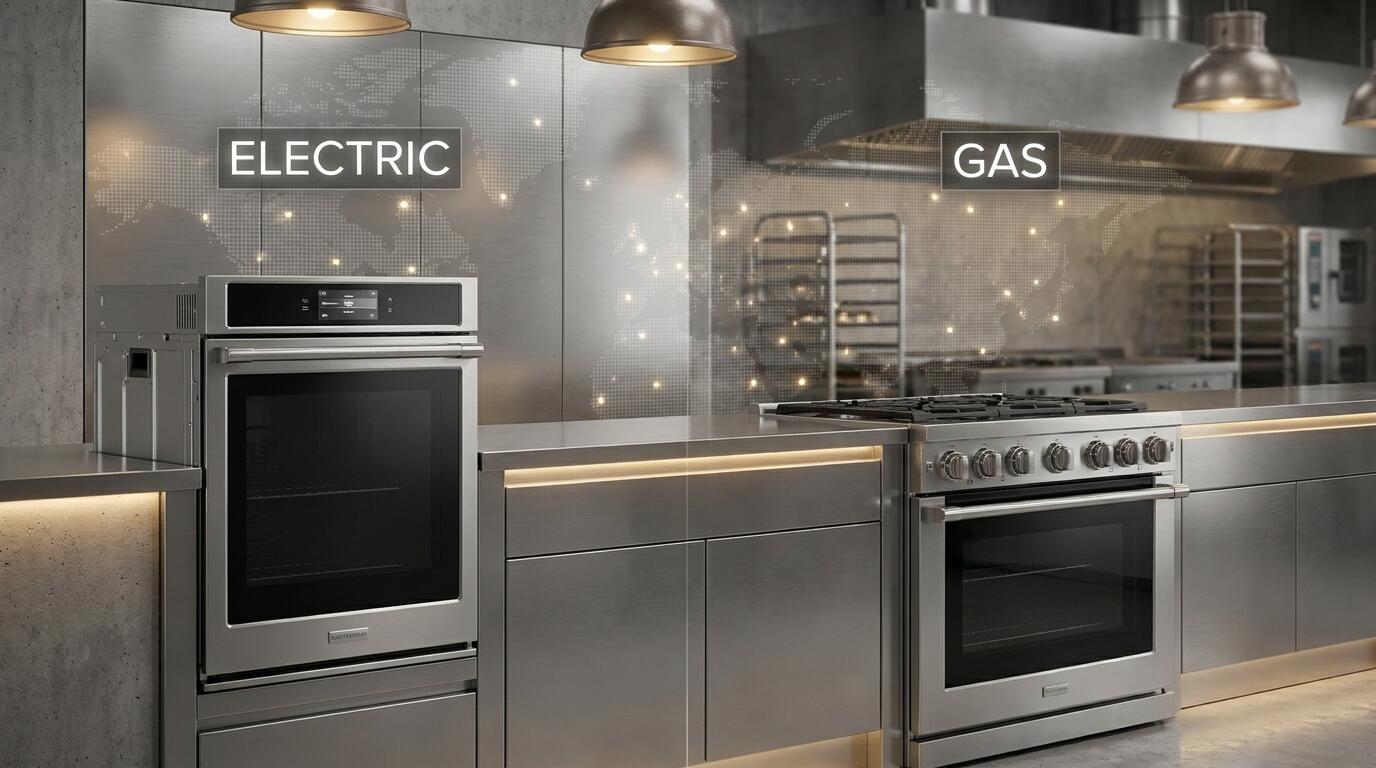
ALT: Electric vs. gas wall ovens sourcing comparison for global B2B kitchen appliance importers
Electric vs. Gas Wall Ovens: What Every Global Sourcing Buyer Needs to Know
When global buyers evaluate wall oven categories for import, retail, or private-label development, the choice between electric and gas configurations is rarely just a technical question — it is a commercial, regulatory, and logistics decision that shapes procurement strategy from factory to end market. Electric wall ovens use resistive heating elements or convection systems powered entirely by electrical connections, while gas wall ovens rely on natural gas or LPG combustion for primary heat generation. Both configurations are mature product categories, yet they diverge sharply across installation requirements, regional demand patterns, certification pathways, and manufacturing complexity.
This article examines both options through a sourcing lens, drawing on the perspective of an OEM/ODM manufacturer with direct experience serving B2B clients across North America, Europe, Australia, and Southeast Asia. The goal is to help procurement managers and product sourcing specialists make informed, market-appropriate decisions before engaging a manufacturing partner.
Key Evaluation Criteria for Sourcing Electric and Gas Wall Ovens
Choosing between electric and gas wall ovens at the sourcing level requires evaluating five core dimensions: regional market fit, regulatory and certification requirements, manufacturing complexity, logistics and installation considerations, and customization potential for private-label development.
Regional market fit is the most immediate variable. Consumer infrastructure — gas pipeline penetration, electrical grid standards, utility costs — determines which configuration will sell. A buyer sourcing for North American suburban retail faces an entirely different landscape than one sourcing for dense urban European distribution or Southeast Asian hospitality procurement.
Regulatory and certification requirements differ significantly between fuel types. Electrical and gas wall ovens must be evaluated against the applicable safety standards and regulatory requirements in each target market. In the United States and Canada, requirements may vary by product category, model, and applicable certification or listing framework. In the European Union, manufacturers must assess the applicable legislation and conformity requirements, including the relevant technical documentation and EU Declaration of Conformity where required. Buyers should verify the exact certification coverage for each model and market before finalizing sourcing decisions. Each additional certification layer adds lead time and cost that procurement timelines must absorb.
Manufacturing complexity affects factory selection, tooling investment, and quality control protocols. Electric and gas wall ovens involve different engineering and component requirements. Gas models require additional consideration of burner assemblies, gas valves, ignition systems, and applicable combustion safety requirements. The actual manufacturing and development complexity depends on the product design, configuration, testing scope, and target-market requirements.
Logistics and installation considerations shape landed cost. Gas wall ovens typically require professional installation and local gas authority sign-off, adding indirect cost that affects the total value proposition at retail or in commercial deployments.
Customization and private-label potential matters for brands building differentiated product lines. The degree to which a manufacturer can accommodate cavity size, finish materials, control interfaces, smart connectivity, and branding elements is a decisive factor when evaluating OEM/ODM partnerships. Understanding whether you need an OEM or ODM arrangement is itself a strategic question — one worth examining carefully before approaching any factory, as covered in our guide on OEM vs. ODM for kitchen appliances.
The Contenders: Electric and Gas Wall Ovens Under the Sourcing Microscope
Electric Wall Ovens: Precision, Versatility, and Broad Market Access
Electric wall ovens have an established presence in markets with developed electrical infrastructure, including parts of North America, Europe, and Australia. However, market demand varies by country, residential infrastructure, consumer preferences, and product segment.
From a sourcing standpoint, electric wall ovens and gas wall ovens involve different engineering and component requirements. Electric models require consideration of heating elements, electrical controls, and power specifications, while gas models require additional attention to burner assemblies, gas valves, ignition systems, and applicable combustion safety requirements. The actual manufacturing and development complexity, including tooling and testing requirements, depends on the specific model, product configuration, customization scope, and target-market requirements. Buyers should evaluate each project individually rather than assume that one fuel type always offers a shorter development cycle.
For private-label brands targeting premium retail channels, electric wall ovens offer the widest canvas for differentiation. Cavity interior finishes, door glass configurations, control panel design, and connectivity features can all be specified at the OEM/ODM level without the combustion engineering constraints that gas models carry. Manufacturing partners like Hyxion, whose product range includes smart electric ovens built for global B2B customization, are equipped to manage these specifications at scale.
The key limitation for electric wall ovens is infrastructure dependency. In markets where electrical grid reliability is inconsistent or where utility costs make electric cooking economically unattractive to end consumers, demand can be structurally limited regardless of product quality. Buyers sourcing for emerging markets must assess local grid context before committing to an electric-only SKU strategy.
Gas Wall Ovens: Infrastructure-Dependent Demand with Distinct Regional Strength
Gas wall ovens are appliances that use combustion of natural gas or liquefied petroleum gas (LPG) to heat a cooking cavity, controlled through gas valves, igniters, and thermostat systems. Demand for gas wall ovens is heavily concentrated in markets where piped gas infrastructure is well established or where LPG availability makes gas cooking economically and culturally preferred.
In parts of North America — particularly in regions where natural gas is a dominant residential energy source — gas wall ovens maintain a loyal consumer segment, especially in the semi-professional and commercial crossover segments. In parts of Southern Europe and Latin America, gas cooking appliances enjoy strong cultural and practical preference. In certain markets where natural gas infrastructure is established or LPG is widely available, gas wall ovens may represent an important product category. Buyers should assess local consumer preferences, infrastructure availability, and distributor demand before deciding whether to include gas models in their product portfolios.
From a manufacturing complexity perspective, gas wall ovens require verified sourcing of burner components, certified gas valve assemblies, and ignition systems, all of which must meet market-specific safety standards. Buyers should evaluate whether the OEM/ODM manufacturer has appropriate internal testing equipment, qualified technical personnel, and documented quality control procedures for the relevant gas appliance models. Internal testing capabilities should be distinguished from formal product certification, which must follow the applicable certification body's procedures.
Customization options for gas wall ovens may be influenced by burner design, combustion system requirements, safety clearances, and applicable product standards. The actual customization scope should be evaluated according to the specific model and engineering requirements, which may limit cavity and control design flexibility. Exterior finishes, branding, control panel aesthetics, and oven rack configurations may remain customizable options for private-label programs, subject to the specific product design and technical requirements.
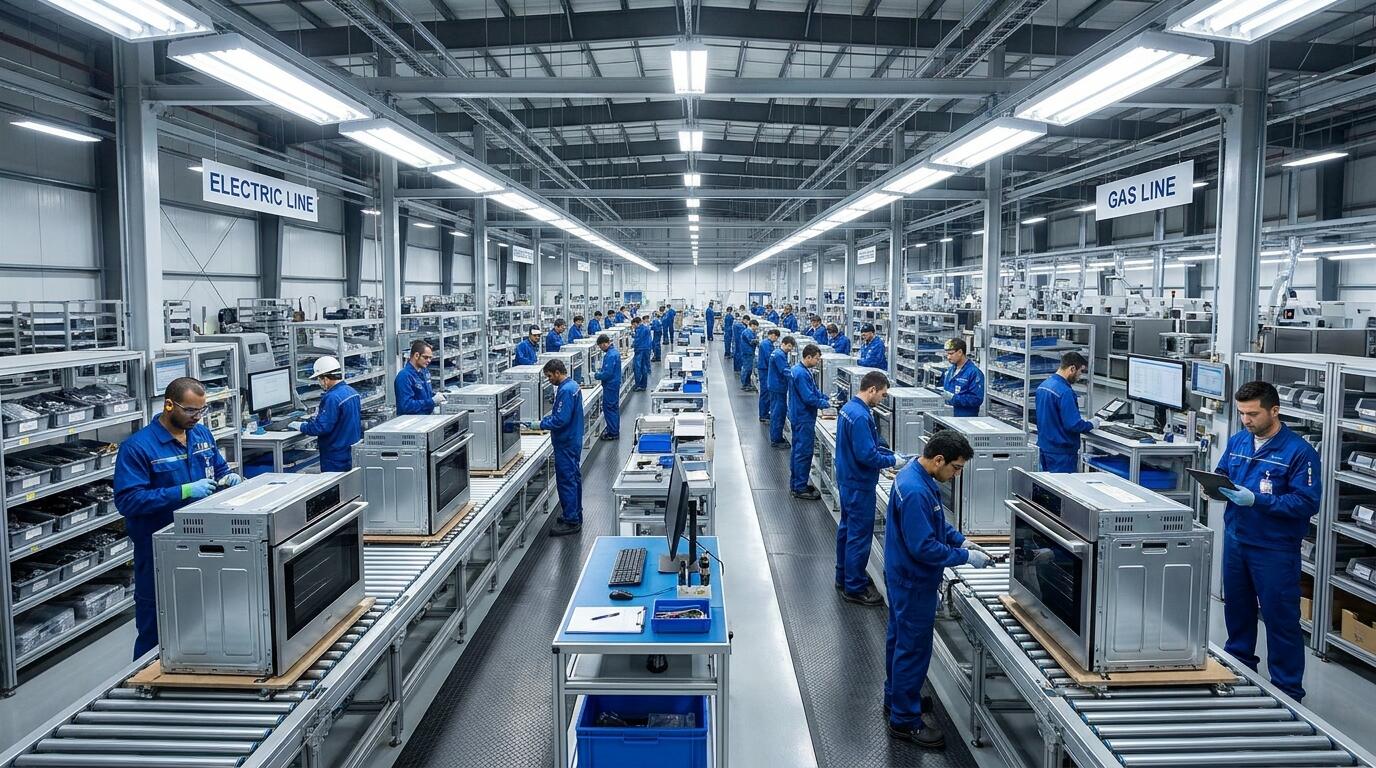
ALT: Side-by-side view of electric and gas wall oven production lines at an OEM/ODM smart kitchen appliance factory for global B2B sourcing
Head-to-Head Comparison: Electric vs. Gas Wall Ovens Across Key Sourcing Criteria
| Criterion | Electric Wall Ovens | Gas Wall Ovens |
|---|---|---|
| Regional market demand | Strong in North America, Europe, Australia, East Asia | Strong in gas-infrastructure markets; parts of North America, Southern Europe, Latin America |
| Certification complexity | Subject to applicable electrical safety, EMC, and energy efficiency standards based on the specific model and target market (e.g., UL, CE, SAA). | Subject to applicable electrical safety as well as gas/combustion safety standards and conformity requirements, depending on the specific model and target market. |
| Manufacturing complexity | Moderate; no combustion components | Higher; burner, valve, ignition engineering required |
| Smart technology integration | Depends on the model's electronic control system, available connectivity features, and smart home integration capabilities. | Depends on the model's control architecture, available connectivity features, and smart home integration capabilities. |
| Customization flexibility | High; broad cavity, control, and finish options | Moderate; combustion geometry constrains some design parameters |
| Installation requirements | Dedicated circuit required; Subject to the model's electrical specifications, installation manual, and applicable local regulations. | Gas line connection required; Subject to the model's gas connection requirements, installation manual, ventilation requirements, and applicable local regulations. |
| Logistics considerations | Generally no hazardous material classification issues | LPG-related components may carry additional shipping requirements |
| OEM/ODM lead time | Development timelines depend on tooling requirements, electronic configurations, testing scope, and certification needs. | Development timelines depend on burner design, gas system configurations, combustion testing, and applicable certification requirements. |
| Private-label potential | Depends on available product platforms, customization options, engineering capabilities, and production capacity. | Moderate;Depends on available product platforms, customization options, engineering capabilities, and production capacity. |
The table above highlights a consistent pattern seen across B2B sourcing engagements: electric and gas wall ovens involve different market, engineering, and compliance considerations. The suitability of each configuration depends on the target market, product specifications, infrastructure, customization requirements, and applicable certification processes.
The certification dimension deserves particular attention. Gas and electric wall ovens may be subject to different regulatory and certification requirements depending on the destination market and product configuration. Buyers should conduct a model-specific compliance assessment to identify applicable testing, documentation, and certification requirements before estimating project costs and timelines. Procurement managers should conduct a full certification gap analysis before committing to a gas wall oven program in a new market. For a structured overview of the certification landscape relevant to North American importers, the kitchen appliance safety certifications guide for North American importers provides a useful framework.
Manufacturing lead time is another area where the two configurations diverge in practice. Gas wall oven development may involve additional engineering considerations, including burner calibration, gas valve sourcing, and combustion testing. The actual number of development iterations depends on product complexity, design maturity, testing results, and certification requirements.Buyers with tight go-to-market timelines should factor this additional buffer into project scheduling when evaluating gas programs.
Which Should You Choose? Scenario Recommendations for Global Sourcing Buyers
The right wall oven configuration depends almost entirely on your target market's infrastructure, your regulatory readiness, and your product development timeline. Neither electric nor gas is universally superior — but the wrong choice for a given market will undermine even a well-executed sourcing strategy.
If you are sourcing for North American retail with a premium kitchen positioning, buyers should evaluate both electric and gas models based on target consumer demand, local energy infrastructure, and specific product configurations. Smart connectivity features—such as app integration, voice control, and over-the-air updates—depend on the electronic control architecture of each specific model rather than fuel type alone, so buyers should compare available smart capabilities across individual SKUs. Maintaining a gas SKU alongside electric models remains commercially prudent in regions where natural gas is a dominant residential energy source.
If you are building a private-label brand for European markets, buyers sourcing for European markets should evaluate the applicable country-specific energy policies, product requirements, electrical infrastructure, and consumer preferences. Product selection should be based on the regulations and market conditions applicable to each destination country.
If your target markets include Latin America, parts of the Middle East, or Southern European countries with strong gas cooking culture, in markets with established gas infrastructure and consumer preference for gas cooking, offering gas wall oven models may help address specific distributor and end-user requirements. Buyers should validate local demand before finalizing their product assortment
If you are launching in Australia or New Zealand, electric wall ovens hold a dominant market position. Buyers sourcing electric or gas wall ovens for Australia should verify the applicable electrical safety, equipment registration, RCM marking, and energy efficiency requirements for the specific product category and model. The relevant compliance obligations should be confirmed according to the product type and applicable Australian requirements.
If you are a hospitality or commercial kitchen buyer, evaluate both configurations against operational energy cost models for the specific installation environment. Commercial applications may prioritize high-volume throughput and serviceability alongside fuel type.
Pros and cons summary:
Electric wall ovens offer a range of heating configurations, control options, and connectivity features, while their suitability depends on the destination market's electrical infrastructure and applicable product requirements. Their development and customization timelines depend on the specific model, engineering scope, testing requirements, and certification arrangements.
Gas wall ovens serve markets where natural gas or LPG infrastructure and consumer preferences support demand. Their development may involve additional considerations related to burner systems, gas valves, ignition components, and combustion safety. The overall development and certification schedule depends on the specific model, product configuration, testing scope, and applicable approval requirements.
Questions & Answers
Q1: How do gas and electric wall oven certification requirements differ across major export markets?
Certification and regulatory requirements for electric and gas wall ovens vary by destination market, product category, and specific model. In the United States and Canada, buyers should verify the applicable electrical safety standards and certification or listing coverage for each model. For the European Union, the relevant product legislation, conformity assessment procedures, and required documentation should be reviewed. In Australia, applicable electrical safety, registration, marking, and energy efficiency requirements should be confirmed according to the product category. Gas models may also require additional assessments relating to combustion safety and gas system requirements. Buyers should verify all applicable requirements before placing orders.
Q2: Are electric wall ovens better suited for smart kitchen integration than gas models?
Electric wall ovens may provide greater flexibility for certain electronic control and connectivity configurations, depending on their control architecture. However, gas wall ovens can also support electronic ignition, digital controls, and selected smart functions. Buyers should evaluate the available features and integration capabilities of each specific model.
Q3: How long does the OEM/ODM development cycle typically take for a custom gas wall oven vs. an electric model?
Development timelines for custom electric and gas wall ovens depend on product specifications, engineering complexity, testing requirements, and target-market certification processes. Gas models may involve additional considerations such as burner calibration and combustion testing. However, the actual project schedule should be established according to the specific design, testing scope, and certification arrangements.
The Bottom Line
Electric and gas wall ovens each occupy a legitimate place in a well-structured global kitchen appliance sourcing strategy — the question is not which is objectively better, but which is right for your target markets, your regulatory readiness, and your product development resources.
Key Takeaways:
- Electric and gas wall ovens serve different market requirements and involve distinct engineering, installation, and compliance considerations. The right sourcing decision depends on the destination market, product configuration, infrastructure, certification requirements, and buyer's commercial objectives.Gas wall ovens serve non-substitutable demand in gas-infrastructure markets and require OEM/ODM partners with verified combustion engineering and certification credentials.
- Certification complexity is a decisive cost and timeline factor—applicable safety standards, testing scope, and compliance requirements for both electric and gas programs depend on the specific model configuration and target market regulations.
- Smart kitchen connectivity depends on the electronic control architecture and available features of each specific wall oven model. Buyers should compare control systems, connectivity options, and compatibility with smart home platforms when evaluating electric and gas models for premium private-label programs.
- Buyers should evaluate OEM/ODM partners based on their relevant certification coverage, documented internal testing capabilities, engineering resources, and experience with the applicable product categories. Existing certifications may support project planning when they cover the intended model and configuration, but any required additional testing or certification should be confirmed with the relevant certification body.
For buyers evaluating sourcing partners, a structured approach to manufacturer qualification is essential. Reviewing a comprehensive OEM/ODM kitchen appliance manufacturer checklist before committing to a factory relationship can help ensure you select a partner whose capabilities match your wall oven program requirements.
Ready to bring your wall oven sourcing strategy to life? Explore Hyxion's electric and gas wall oven product range and discuss your OEM/ODM requirements with the team. Buyers can review available product configurations, customization options, and applicable certification documentation before starting a sourcing project. Visit the Hyxion website to explore product lines, request a custom quote, or connect with the team to start your next sourcing partnership.
References & Further Reading
- Underwriters Laboratories (UL). "Appliance Safety Certification Standards and Testing Resources".
https://www.ul.com - European Commission. "CE Marking Requirements for Appliances Burning Gaseous Fuels and Electrical Equipment".
https://ec.europa.eu - CSA Group. "Gas and Electrical Appliance Safety Standards for North American Markets".
https://www.csagroup.org
Note: Standards may be updated; please check the latest official documents or consult professional advisors.