
Built-In Steam Ovens: An Emerging Category for Premium Kitchen Lines
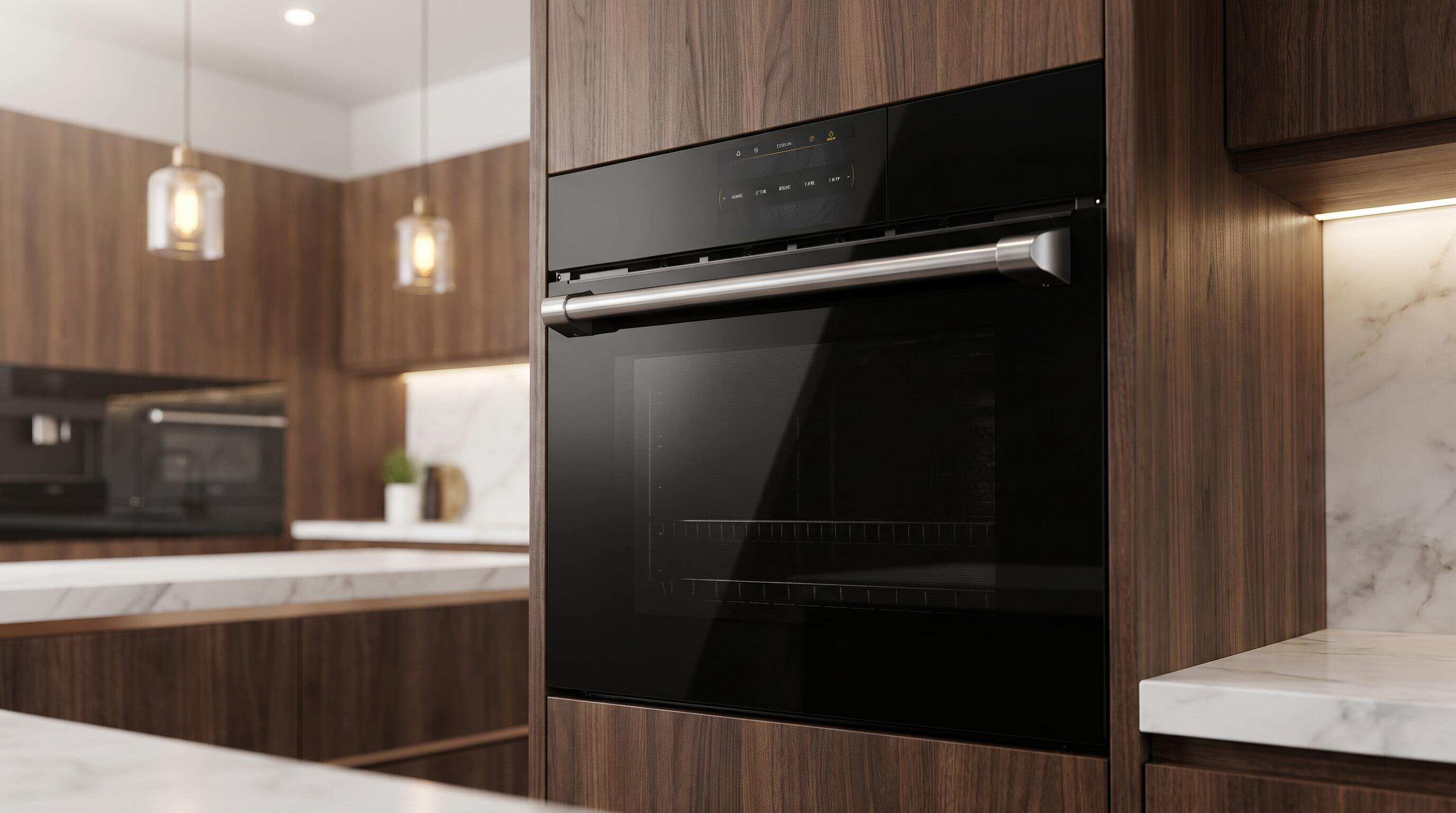
ALT: Built-in steam oven integrated into a high-end kitchen line, showcasing premium appliance category growth for OEM buyers
Why Built-In Steam Ovens Are Redefining Premium Kitchen Appliance Lines
Built-in steam ovens represent one of the most significant shifts in residential kitchen equipment in recent memory — moving from professional culinary settings into the mainstream of premium home and high-specification hospitality kitchens. For importers, distributors, and private-label brands seeking to differentiate their product portfolio, understanding this emerging category is not optional; it is strategically essential.
The global appetite for sophisticated, health-conscious cooking solutions has opened a clear commercial window. Consumers are demanding more from their kitchen appliances: better nutrition retention, greater cooking versatility, and an elevated aesthetic that seamlessly integrates with custom cabinetry. Built-in steam and combination steam ovens tick all three boxes — and that alignment between consumer expectation and product capability is precisely what makes this category so compelling for B2B buyers right now.
In our work with clients across North America, Europe, and Australia, we consistently see the same pattern: distributors and retail chains that add a credible built-in steam oven SKU to their premium tier report stronger category margins and improved brand positioning. The challenge is sourcing a manufacturing partner with the technical depth to deliver these units reliably at competitive pricing and with private-label flexibility. This article explains what built-in steam ovens are, why the category is gaining momentum, and how to evaluate manufacturing and sourcing options intelligently.
Who Should Be Reading This — and Who Should Not
Applicable Scenarios:
- Kitchen appliance importers looking to expand into the premium or luxury segment and wanting a category that supports higher average selling prices
- Private-label brands building a differentiated product line for retail chains, home improvement stores, or hospitality procurement
- Wholesale distributors serving professional contractors, interior designers, or high-end residential developers who specify integrated kitchen appliances
- OEM/ODM sourcing managers evaluating manufacturing partners for a new steam oven product range
Not Applicable / Cautions:
- Buyers focused exclusively on entry-level or mass-market kitchen appliance categories, where steam oven complexity and price points may not align with their customer base
- Procurement teams with highly compressed lead-time requirements that do not allow for tooling or customization cycles typical of built-in appliance categories
The Market Context Driving Built-In Steam Oven Demand
Built-in steam ovens are kitchen appliances that cook using steam — either as the primary heat source or in combination with conventional radiant or convection heat — and are designed to be installed flush within cabinetry or a dedicated wall-oven housing. The combination variant, often called a combi-steam oven, allows the user to switch between pure steam, dry heat, and blended modes, making it among the most versatile single cooking units available on the residential market today.
The category's growth is being driven by several converging forces. First, there is a broad, documented shift toward health-aware cooking: steam cooking preserves moisture, vitamins, and texture in ways that conventional dry-heat ovens cannot match. For consumers investing in a premium kitchen renovation or specification, the ability to replicate restaurant-caliber steam cooking at home has become a genuine purchase motivator. Second, the design integration trend — the move toward fully fitted, handleless kitchen environments where appliances disappear into the joinery — makes built-in formats highly desirable from an aesthetic standpoint. A free-standing countertop steam unit simply does not satisfy this design language.
Third, and particularly relevant for B2B buyers, premium kitchen lines are experiencing sustained demand across the segments that drive commercial appliance sales: high-spec residential new builds, luxury hospitality refurbishments, and the growing market for European-style fitted kitchen packages. Market research tracked by Dataintelo indicates that the built-in steam oven market is on a consistent upward trajectory, with the category attracting investment from both established appliance majors and challenger brands looking to capture market share in underserved price tiers.
From a manufacturing perspective, built-in steam ovens require more sophisticated engineering than a standard convection oven: water management systems, stainless steel cavity treatment for steam resistance, precise temperature and humidity control, and software-driven cooking programs all add complexity. This complexity raises the barrier to entry — but it also creates a durable competitive moat for brands that invest in the category with a credible supplier behind them.
Sourcing and Specifying Built-In Steam Ovens: A Practical Framework
Three Steps to Evaluating Built-In Steam Ovens as an OEM/ODM Category
Step 1: Define Your Target Market Tier and Specification Requirements
Before approaching any manufacturer, clearly map your target market tier — entry-premium, mid-luxury, or ultra-premium — because this determines the specification depth you need. For entry-premium, a pure steam or basic combi unit with a stainless steel cavity, digital controls, and a curated cooking program set may suffice. Mid-luxury buyers typically expect larger cavity volumes, touch-display interfaces, Wi-Fi or app connectivity, and a broader cooking mode library. Ultra-premium positioning often demands seamless door design, advanced sensor cooking, and full smart home integration. Document these requirements in a brief before initiating supplier conversations.
Step 2: Assess Manufacturing Partner Capability Against Category Complexity
Built-in steam oven manufacturing demands capabilities that not every kitchen appliance factory possesses. Evaluate whether your prospective OEM/ODM partner has in-house experience with steam system engineering, cavity coating and sealing, water tank or plumbed-water configurations, and electronic control system development. Request samples of existing steam oven products to assess build quality. For brands that need to reach regulated markets — North America, the EU, Australia — confirm that your partner can support the relevant certification pathways. The article CSA and UL Certification Explained: Why In-House Testing Labs Speed Up Market Entry provides a useful framework for understanding how in-house testing capability at a factory level accelerates regulatory approval and reduces time-to-market risk.
Step 3: Structure the Customization and Private-Label Brief
Built-in appliances are inherently brand-sensitive: the door glass, handle design, control panel typography, cavity color, and exterior finish are all visible expressions of your brand identity. Work with your manufacturing partner to identify which elements are tooled (requiring upfront investment) and which are surface-level (finish, labeling, software UI). A manufacturer with genuine OEM/ODM depth — including in-house tooling, software development, and industrial design capability — will be able to co-create a product that looks and performs distinctly different from a generic base unit. Establish minimum order quantities, lead times for custom tooling, and sample production timelines before committing to a program.
Comparing Built-In Steam Oven Configurations: What Importers and Distributors Need to Know
The built-in steam oven category is not monolithic. Products differ significantly across three primary configurations, and your choice of configuration should directly reflect your target channel and end-customer profile.
| Comparison Dimension | Pure Steam Oven | Combi-Steam Oven | Steam-Assist Convection Oven |
|---|---|---|---|
| Core Function | Cooks exclusively with steam; ideal for vegetables, fish, grains, and reheating | Combines steam and dry heat in variable ratios; highest versatility | Primarily a convection oven with injected steam for specific functions (e.g., bread proofing, moisture retention) |
| Target Consumer | Health-focused buyers; households with specific dietary requirements | Serious home cooks and prosumer buyers seeking full culinary range | Consumers upgrading from a standard oven who want steam benefits without full commitment |
| Design Integration | Full built-in; typically requires dedicated housing or trim kit | Full built-in; often positioned alongside a separate conventional oven | Full built-in; typically replaces a standard wall oven in an existing cavity |
| Cavity Treatment | Stainless steel with steam-resistant sealing; moisture drainage essential | Stainless steel; dual thermal and steam management systems | Stainless steel; steam injection components require periodic descaling |
| Control Interface | Digital or touch display with steam-specific programming | Advanced touch or TFT display; multi-mode cooking programs | Comparable to premium convection oven controls; steam modes additional |
| Certification Complexity | Moderate — steam appliance standards apply | Higher — dual-mode systems require comprehensive electrical and thermal certification | Moderate-to-high — depends on market and connectivity features |
| OEM/ODM Customization | High — fewer mechanical variables; more design latitude | High — platform-driven; software and UI customization are differentiators | High — large installed base of similar products creates reference platforms |
| Recommended Channel | Premium residential, health-focused retail, hospitality | Luxury residential, premium kitchen studios, flagship retail | Broad premium residential, home improvement chains |
Introductory note: when discussing this table with procurement teams, we consistently observe that the combi-steam configuration commands the highest interest from distributors targeting the core premium residential segment, while pure steam units are increasingly specified in hospitality environments where dietary flexibility and food safety are operational requirements.
Technical and Design Considerations for Specifying a Built-In Steam Oven Program
Understanding Cavity Design and Water Management
The cavity of a built-in steam oven is a critical engineering element. Unlike a standard convection oven, it must manage condensation, support sustained high-humidity environments, and resist the corrosive effects of prolonged steam exposure. Quality-tier manufacturing uses fully welded stainless steel cavities with rounded internal corners for easier cleaning and effective steam circulation. The water supply configuration — fixed plumbed connection versus removable water tank — has significant implications for installation flexibility. Plumbed units are preferred in high-specification kitchen environments where the appliance is a permanent installation; tank-fed units offer greater installation flexibility and are often more practical for retrofit projects.
Smart Controls and Connectivity as Differentiators
In the premium segment, control system sophistication is a primary purchase driver. Contemporary built-in steam ovens increasingly feature touch-screen displays, pre-programmed cooking modes with steam time and temperature profiles, and connectivity features that allow remote monitoring or recipe download via a smartphone application. For OEM/ODM clients, this represents a meaningful customization opportunity: the cooking program library, the UI language and layout, and the connectivity platform can all be developed to reflect the brand's proprietary identity rather than a generic interface. At Hyxion, our experience developing smart kitchen appliances across multiple connected platforms positions us to advise clients on which connectivity architectures are compatible with their target market's ecosystem preferences.
Exterior Finish and Integration Aesthetic
Built-in appliances are, by design, focal points of the fitted kitchen. Door finish — glass type, edge treatment, handle design — and trim compatibility with specific cabinetry systems are matters that high-specification interior designers and kitchen studios take seriously. OEM/ODM clients entering this category should invest in distinctive exterior styling that differentiates their product from generic OEM bases. Matte black glass, handleless push-to-open mechanisms, and backlit control strips are among the aesthetic directions that consistently resonate in the European and North American premium markets that our clients target.
Certification Planning for Steam Appliance Categories
Built-in steam ovens sold into North American markets require UL or CSA certification for electrical safety; European markets require CE marking with conformity to relevant appliance directives; Australian and New Zealand markets require SAA/RCM certification. Steam-specific performance standards may apply in addition to general oven electrical standards — this is a nuance that buyers sometimes underestimate at the sourcing stage. Working with a manufacturer that operates in-house testing laboratories and has experience managing multi-market certification programs is a significant advantage in compressing the path from prototype to commercial shipment. For buyers evaluating their overall OEM sourcing strategy, the guidance in How to Choose an OEM/ODM Kitchen Appliance Manufacturer in Q4 2026: A Buyer's Checklist offers a structured evaluation framework that applies directly to this category.
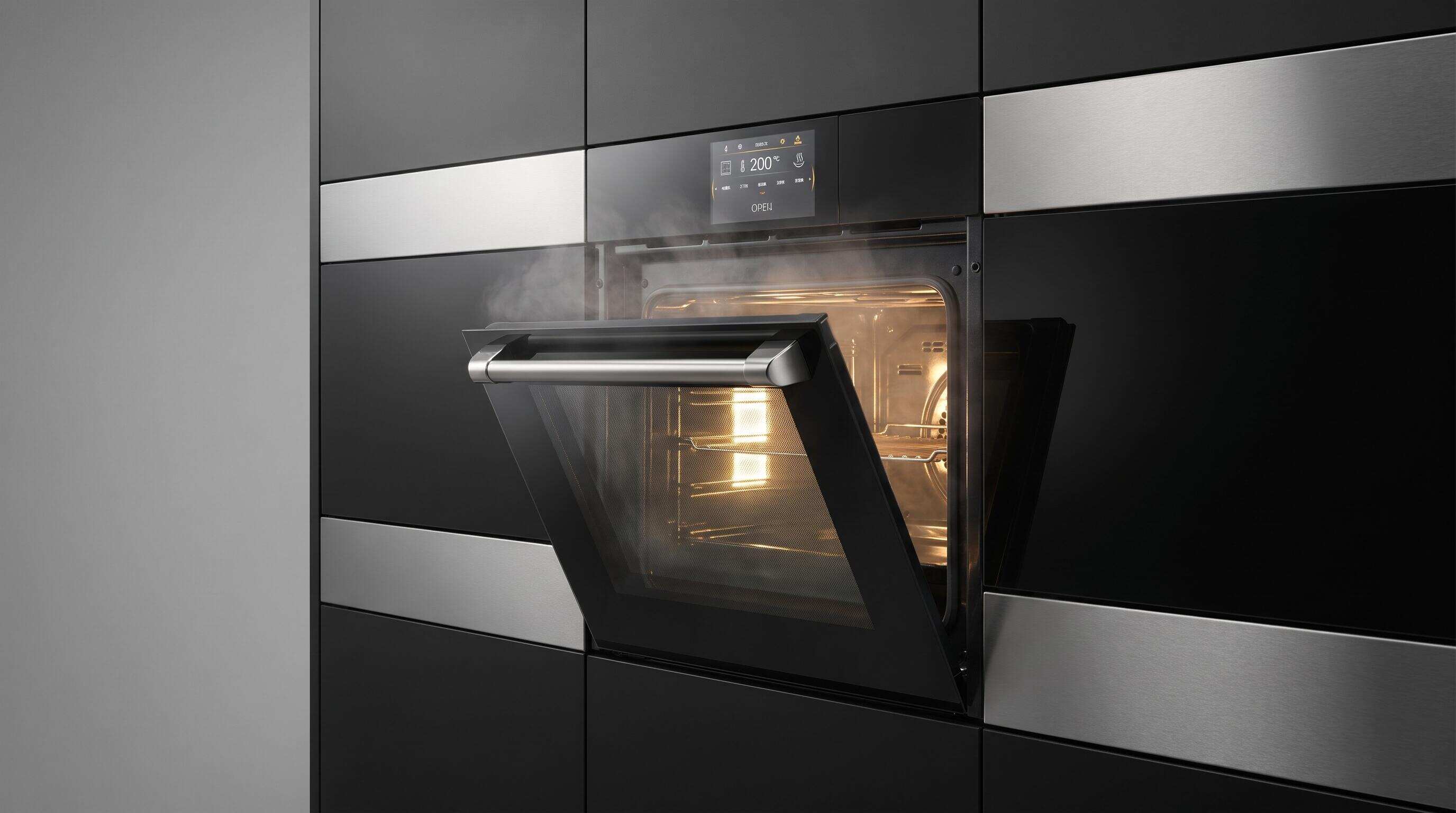
ALT: Interior view of a premium built-in combi-steam oven with smart touch controls, highlighting OEM/ODM manufacturing quality for global importers
Advanced Considerations for Premium Steam Oven Programs
Navigating the Combi-Steam vs. Pure Steam Decision at Scale
A pattern we consistently see when working with clients entering the built-in steam category for the first time is the temptation to launch with the most fully featured combi unit immediately. In practice, a phased approach often performs better commercially: launching a pure steam or steam-assist product first allows the brand to establish category credibility, train retail or distribution partners, and gather real-world consumer feedback before committing the tooling and marketing investment required for a full combi-steam flagship.
Misconception: Steam Ovens Are a Niche, Low-Volume Product
The perception that built-in steam ovens are too specialist for mainstream distribution is increasingly outdated. As premium kitchen penetration rises across North American and European residential markets — particularly in the new-build and kitchen renovation segments — built-in steam ovens are transitioning from aspirational purchases to expected inclusions in a credible premium kitchen suite. Brands that treat this category as niche risk ceding the premium tier to competitors who move sooner.
Relationship With Adjacent Premium Appliance Categories
Built-in steam ovens rarely sell in isolation. In the channels where they perform best, they are specified alongside complementary premium appliances: warming drawers, speed ovens, induction cooktops, and integrated ventilation. OEM/ODM clients who can offer a coherent built-in steam oven alongside a broader premium cooking suite — whether from a single manufacturing partner or a curated multi-supplier program — are better positioned to win shelf space from premium kitchen retailers and to command a higher average basket value from professional kitchen specifiers.
People Also Ask
Q1: How does a built-in combi-steam oven differ from a standard built-in convection oven?
A built-in combi-steam oven differs from a standard convection oven in that it combines radiant or convection heat with injected steam, allowing the user to cook in pure steam mode, dry heat mode, or a combination of both. This versatility enables moisture retention, crisping, and professional-level cooking results that a conventional oven cannot replicate. For premium kitchen lines, the combi-steam format is particularly compelling because it effectively replaces two or more single-function appliances in a single built-in cavity.
Q2: Are built-in steam ovens suitable for all residential kitchen segments or only luxury installations?
Built-in steam ovens are most commercially viable in the premium and luxury residential segments, as well as professional hospitality environments, where consumers and specifiers prioritize cooking performance, design integration, and product longevity over entry-level price points. While the category is accessible at a range of price tiers, it typically sits above mass-market appliance budgets. Distributors serving mid-to-upper residential new build, premium kitchen renovation, or high-specification hospitality channels will find the strongest sales alignment.
Q3: How long does the OEM/ODM development process typically take for a private-label built-in steam oven?
The development timeline for a private-label built-in steam oven varies depending on the degree of customization required and the specific project conditions. Surface-level private labeling — including branding, color, and software UI localization applied to an existing base platform — generally involves less development work, with the overall timeline determined by project configuration, customization scope, material availability, testing and certification requirements, and production scheduling. Custom tooling for unique door designs, handle specifications, or cavity configurations typically adds further lead time for tooling fabrication and sample approval. Buyers should work with their manufacturing partner to map out the full project timeline and critical path early, particularly when certification testing for new market entries is required.
Wrapping Up
Built-in steam ovens are no longer a peripheral category for specialist buyers — they represent a structurally growing segment of the global premium kitchen appliance market, with compelling commercial logic for distributors, importers, and private-label brands ready to invest in the category.
Key Takeaways:
- Built-in steam ovens — including pure steam, combi-steam, and steam-assist configurations — are distinct product types with different channel fits, and choosing the right format is the first step in a successful sourcing program.
- The technical complexity of steam oven manufacturing (cavity engineering, water management, smart controls, multi-market certification) demands a manufacturing partner with demonstrated experience in the category, not simply a general oven factory.
- OEM/ODM customization — from exterior aesthetic to cooking software and connectivity platform — is the primary lever for building brand differentiation in a category where generic product will not command premium positioning.
- Certification planning for steam appliance categories is non-trivial; buyers entering North American, European, or Australian markets should factor regulatory lead times into their product launch timelines.
- A phased market entry strategy — beginning with an achievable configuration and expanding the range based on market response — consistently outperforms an over-ambitious launch that stretches sourcing and marketing resources.
The next step for procurement teams and product directors evaluating this category is to initiate direct conversations with a manufacturer that combines genuine steam oven engineering depth with OEM/ODM flexibility and competitive Dongguan-sourced pricing.
Ready to build a credible built-in steam oven program for your brand? Explore Hyxion's full range of customizable smart kitchen appliances — including built-in ovens, smart ranges, and integrated cooking solutions — by visiting the Hyxion website to request a product catalogue, discuss OEM/ODM customization options, or initiate a sample program tailored to your target market.
Sources
- Robam UAE. "Steam Ovens for Elevated Built-In Kitchens".
https://robam-uae.com/blogs/news/steam-ovens-elevated-built-in-kitchens?srsltid=AYCX9vK95m4SYIQ6EIBovvUxNzxCTh8pzsL1MOfY7NvF-HseQRbx7lD7 - UAKC. "Combi Steam vs Traditional Oven: Which One Delivers Better Cooking Results in 2026".
https://uakc.com/blog/combi-steam-vs-traditional-oven-which-one-delivers-better-cooking-results-in-2026 - Dataintelo. "Built In Steam Oven Market".
https://dataintelo.com/report/built-in-steam-oven-market - Thermador. "Luxury Built-In Wall Ovens & Steam Ovens".
https://www.thermador.com/us/en/mkt-category-page/ovens - LinkedIn Pulse. "Residential Combination Steam Oven Market: Trends and Insights".
https://www.linkedin.com/pulse/residential-combination-steam-oven-market-trends-6scgf
Note: Standards and market conditions may be updated; please check the latest official documents or consult professional advisors for current regulatory and market guidance.