Inside Hyxion's Thailand Factory: Capacity and Production Timeline for 2026
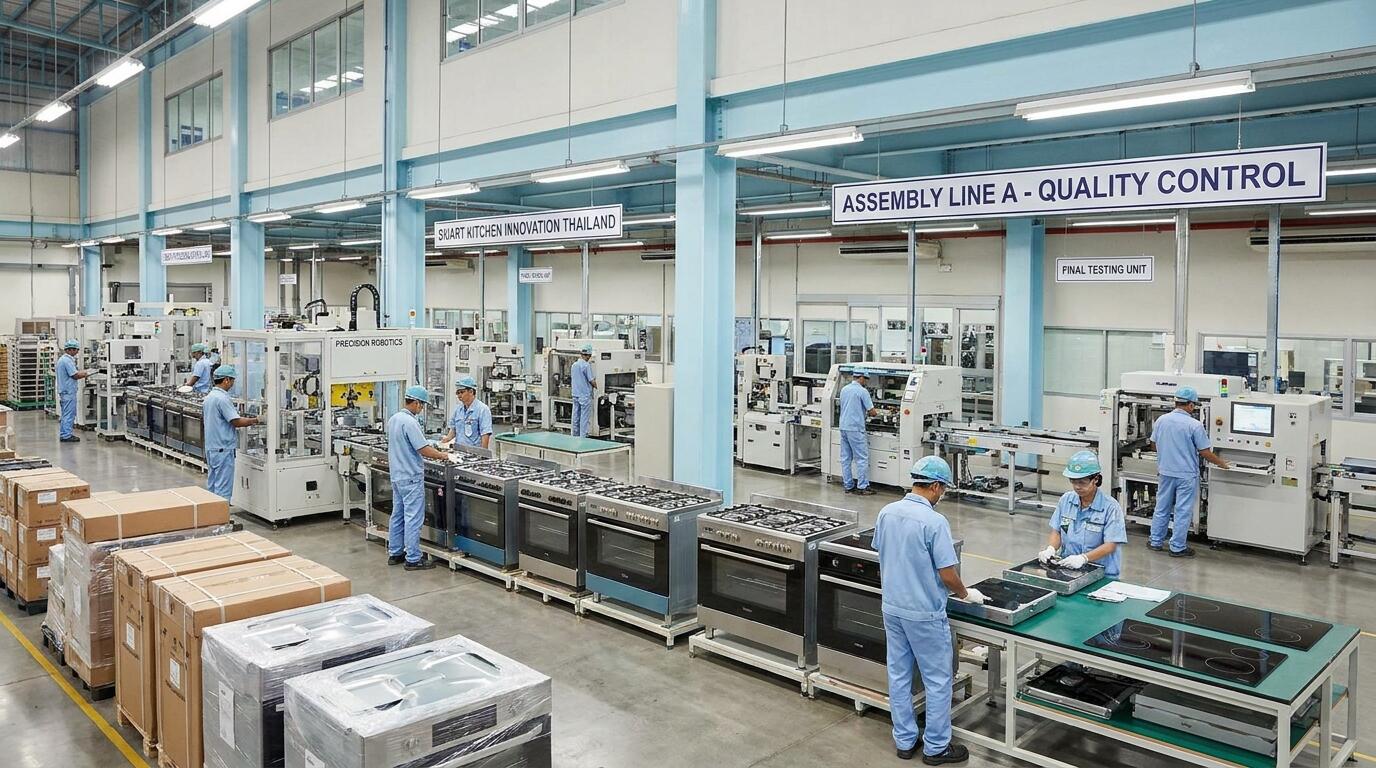
ALT: Inside Hyxion's Thailand factory floor showing smart kitchen appliance production capacity and 2026 assembly timeline
What Hyxion's Thailand Factory Means for Your 2026 Sourcing Strategy
Key Conclusion: Hyxion is a China-based OEM/ODM manufacturer of kitchen appliances serving global B2B partners. Its manufacturing operations include a Thailand-based production facility, supporting production planning and supply chain coordination for selected appliance categories. Buyers evaluating Hyxion as a manufacturing partner should confirm the specific product capabilities, available production capacity, and order arrangements applicable to their projects. For B2B buyers evaluating OEM/ODM manufacturing partners, coordinating product development milestones with factory production schedules is an important part of sourcing planning. This article examines production capacity considerations, manufacturing lead-time variables, and practical steps buyers can take to align product specifications with available production arrangements.
Planning a large-scale kitchen appliance procurement without visibility into your manufacturer's actual production calendar is one of the riskiest moves a sourcing manager can make. For B2B buyers evaluating OEM/ODM manufacturing partners, coordinating product development milestones with factory production schedules is an important part of sourcing planning. This article examines production capacity considerations, manufacturing lead-time variables, and practical steps buyers can take to align product specifications with available production arrangements. This article opens the door to Hyxion's manufacturing operations, covering production capacity planning, 2026 timeline milestones, and the operational detail that separates a smooth product launch from an expensive delay.
Three core points anchor this discussion: first, how Hyxion structures its production capacity to accommodate both high-volume standard orders and bespoke OEM/ODM customization; second, what a realistic 2026 production timeline looks like from first inquiry through final shipment; and third, where the most common sourcing mistakes occur — and how to sidestep them before they become contractual problems.
Who Should Read This — and Who Shouldn't
Applicable Scenarios:
- Procurement managers and product sourcing specialists actively planning kitchen appliance purchase orders for 2026 retail or distribution cycles who need realistic factory lead-time data before committing to supplier agreements
- Private-label brands and importers evaluating OEM/ODM manufacturing partnerships in Southeast Asia and seeking a qualified, scalable factory capable of handling custom specifications for ranges, ovens, cooktops, rangetops, dishwashers, or outdoor kitchen cabinets
- Retailers and distributors whose existing supplier relationships have created delivery unpredictability and who are exploring Hyxion as a more capacity-transparent alternative for their next product season
Not Applicable/Cautions:
- Consumers or end-users looking for retail product availability information — this article is written exclusively for B2B procurement decision-makers and sourcing professionals, not individual buyers
- Buyers seeking a purely domestic (non-China/Southeast Asia) manufacturing solution, as Hyxion's operational infrastructure is built around factory-direct export from its manufacturing base
The Shifting Landscape of Smart Kitchen Appliance Manufacturing in Southeast Asia
Smart kitchen appliances — a category encompassing connected ranges, induction cooktops, built-in ovens, and integrated outdoor kitchen systems — have experienced sustained global demand growth as residential construction, kitchen renovation cycles, and the rise of connected home ecosystems continue to expand. For B2B buyers, this growth creates both opportunity and pressure: the opportunity to build differentiated private-label lines with smart features, and the pressure to secure reliable manufacturing capacity before it fills.
Southeast Asia has emerged as a strategically significant manufacturing corridor for appliance categories that require both precision assembly and cost-competitive production. Thailand is one of Southeast Asia's established manufacturing locations, with industrial infrastructure and international logistics connections that may support regional production and export operations. However, the suitability of a manufacturing location depends on the product category, component supply arrangements, production capabilities, and destination-market compliance requirements. Buyers should assess these factors separately when evaluating a Thailand-based sourcing option. The International Labour Organization and regional trade bodies have documented the region's growing role in higher-value manufacturing sectors, a trend that is directly relevant to buyers sourcing appliances for markets with strict compliance requirements.
Hyxion is a China-based OEM/ODM manufacturer specializing in smart kitchen appliances — including smart ranges, ovens, cooktops, rangetops, dishwashers, and outdoor kitchen cabinets — that has built its value proposition around providing factory-direct, customization-capable production to global B2B partners. The Thailand-linked manufacturing orientation reflects a broader industry reality: buyers increasingly want supply chain optionality, and manufacturers that can demonstrate geographic flexibility and production transparency are winning more long-term sourcing relationships.
When entering OEM/ODM negotiations, buyers should understand how existing orders affect production capacity allocation. A factory's available production window may vary depending on its current order book, component availability, product complexity, and customization requirements. Before committing to a target shipment date, buyers should request a project-specific production schedule and confirm the expected start and completion milestones with the manufacturer.
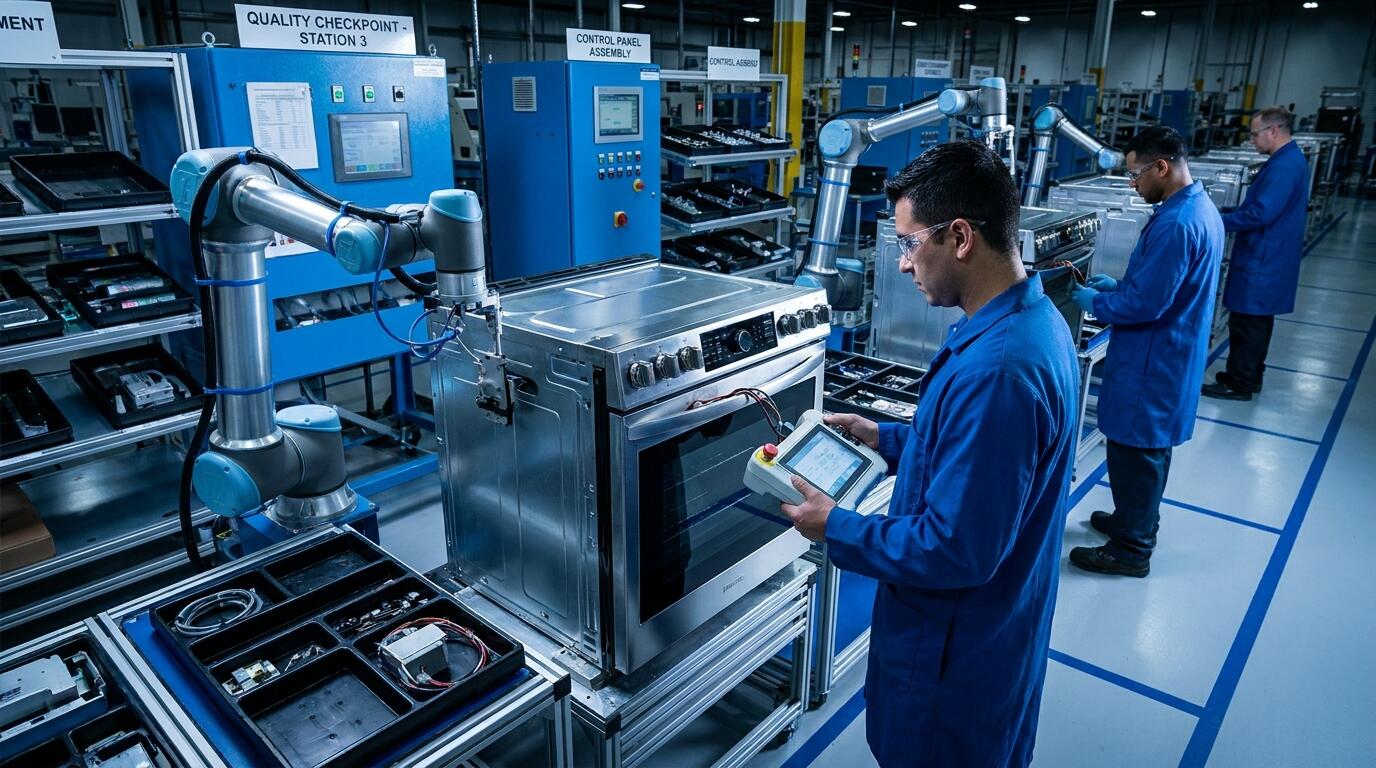
ALT: Hyxion OEM smart kitchen appliance factory production line with custom range and oven assembly for 2026 B2B export orders
Navigating the 2026 Production Cycle: A Practical Framework
Getting Started: Three Steps to Securing Your 2026 Production Slot
Step 1: Define Your Product Specification and Minimum Order Volume
The single most common cause of production timeline delays is a specification definition process that runs in parallel with factory scheduling instead of preceding it. Before approaching Hyxion or any OEM/ODM manufacturer about 2026 capacity, procurement teams should have a consolidated product brief that covers appliance category (range, oven, cooktop, dishwasher, outdoor cabinet), key functional features, target certification requirements (such as UL, CE, or SAA depending on destination market), preferred finish and packaging, and an estimated order quantity range. This brief does not need to be final — but it needs to be specific enough to allow a factory to match your requirement against available production windows. The preparation period depends on the completeness of the buyer's product requirements, internal approval process, and the number of technical specifications that need to be confirmed. Buyers should allow sufficient time to consolidate the product brief before requesting a factory capacity assessment.
Step 2: Engage the Manufacturer for a Capacity and Timeline Consultation
Once your product brief is in reasonable shape, the next step is a structured conversation with the manufacturer's sales and production planning team. For Hyxion, this consultation involves reviewing the current order book, available production windows for the target order period, tooling and mold requirements where applicable, and minimum order quantities for the selected product category. The actual schedule should be confirmed against current factory capacity and project-specific requirement. In our experience working with buyers at this stage, the most productive consultations are those where the buyer arrives with questions about the factory's constraints, not just a list of their own requirements. Understanding where the production bottlenecks are — whether in component sourcing, assembly capacity, or finishing and testing — is what allows you to build a realistic timeline rather than an optimistic one.
Step 3: Lock in a Production Agreement with a Staged Milestone Schedule
Before production begins, the buyer and manufacturer should formalize the purchase or production agreement and confirm the relevant project milestones. Depending on the product and customization scope, additional prerequisites may include approved samples, finalized specifications, material readiness, applicable compliance documentation, and confirmed production scheduling. This schedule should map out sample development and approval (a phase that is frequently underestimated), material procurement lead times, production start and completion windows, quality inspection checkpoints, and shipment readiness dates. The timing of production agreements should be determined by the target shipment window, product complexity, sample approval requirements, component lead times, and available factory capacity. Buyers planning seasonal product launches should discuss their expected delivery windows with the manufacturer early enough to allow for specification confirmation, sample validation, and production scheduling. The agreement should define the key milestones and responsibilities rather than rely on a universal advance-booking period.
Comparing OEM/ODM Engagement Models: Which Fits Your 2026 Needs?
Different buyers arrive at an OEM/ODM relationship with very different starting points — some need a fully bespoke product built from the ground up, others need minor customization of an existing platform, and some simply need private-label packaging on a proven design. The table below maps these scenarios against key sourcing dimensions to help procurement teams identify the right engagement model before entering negotiations.
| Comparison Dimension | Full Custom OEM | Platform-Based ODM | Private Label |
|---|---|---|---|
| Development scope | New design based on buyer specifications | Customization within an existing platform | Selection of an existing product design |
| Development requirements | May involve new tooling, engineering and validation | Depends on customization and platform compatibility | Mainly involves product selection, branding and packaging confirmation |
| Timeline considerations | Depends on design complexity, tooling and testing | Depends on platform readiness and required modifications | Depends on product availability, labeling and order arrangements |
| Certification considerations | Product-specific assessment required | Existing documentation must be checked against the modified configuration | Existing certification coverage must be verified for the actual model and brand |
| Suitable applications | Brands requiring differentiated product designs | Buyers seeking customization within an established platform | Buyers selecting existing products for market entry |
Consult Hyxion's production team directly for current capacity availability by engagement model and minimum order thresholds applicable to specific product categories.
Understanding Hyxion's Production Capability Across Product Lines
Hyxion's overall product portfolio includes multiple kitchen appliance categories. However, manufacturing locations, production responsibilities, and available customization options may differ by product line. The product descriptions below should therefore be read as an overview of Hyxion's broader manufacturing and sourcing capabilities, not as confirmation that every category is produced at the Thailand facility. Buyers should confirm the responsible factory and production scope for each specific project.
Smart Ranges and Rangetops
Smart ranges and rangetops are product categories that may involve different structural configurations and manufacturing requirements. For buyers evaluating these products, key considerations include cooking cavity configuration, burner or induction specifications, control interfaces, and destination-market compliance requirements. The availability of specific product structures and customization options should be confirmed against Hyxion's current product portfolio and manufacturing arrangements.
Ovens and Cooktops
Built-in ovens and cooktops are product categories where an existing product platform may provide a starting point for OEM/ODM development. Buyers targeting North American, European, or Australian and New Zealand markets should verify the applicable standards, certification documents, and coverage for the specific model, electrical configuration, and intended brand. Any changes to product design, components, or configuration should be reviewed to determine whether additional assessment or testing is required.
Customization involving door design, control interfaces, finish colors, and branding should also be evaluated against the existing platform specifications and project requirements. More extensive changes to cavity performance, convection systems, or specialized features may require additional engineering and validation work.
Dishwashers
Dishwasher manufacturing involves coordination between hydraulic systems, electronic controls, and component sourcing. Buyers targeting North American markets should identify the applicable product safety, energy efficiency, and water-use requirements for the specific model and destination market.
ENERGY STAR is a voluntary energy-efficiency certification program in the United States. Buyers seeking ENERGY STAR qualification should verify the applicable product specifications, testing requirements, and certification criteria for the relevant dishwasher model. Regulatory compliance and voluntary efficiency certification should be evaluated separately during product development.
Outdoor Kitchen Cabinets
Outdoor kitchen cabinets are a growth category where Hyxion's OEM/ODM capability extends beyond appliances into the broader outdoor living space. For B2B buyers in markets with strong outdoor entertaining culture — notably the United States, Australia, and parts of Europe — this is a category with strong private-label margin potential. Outdoor kitchen cabinets require material and finish specifications suited to their intended installation environment. Buyers planning installations in coastal, tropical, or high-humidity locations should consider factors such as stainless steel grade, surface treatment, drainage design, moisture exposure, and maintenance requirements. The suitability of a particular material and finish combination should be confirmed through product specifications and, where relevant, environmental testing or manufacturer guidance.
Quality Control Checkpoints Within the Production Timeline
No production timeline discussion is complete without addressing quality control, because QC failures at late stages are the most expensive timeline disruptions a buyer can face. In our work with OEM sourcing clients, identifying a critical defect during pre-shipment inspection may require additional investigation, corrective action, rework, and re-inspection. The resulting schedule impact depends on the defect type, affected components, availability of replacement materials, and the scope of corrective work. Buyers should account for potential quality-related adjustments when planning production and shipment milestones.
For buyers establishing a quality control plan for an OEM/ODM order, relevant checkpoints may include incoming material inspection, in-process quality checks, and pre-shipment inspection. The scope and frequency of these activities should be agreed upon between the buyer and manufacturer. Where independent third-party inspection is required, the parties should separately confirm the inspection scope, responsible provider, timing, and associated costs. Product certification and destination-market compliance documentation should also be reviewed before shipment. ISO 9001 provides a framework for quality management systems, but it does not replace product-specific inspection or testing evidence. Buyers evaluating a manufacturing partner should review the relevant quality management documentation alongside actual inspection procedures, product test records, and batch-level quality reports applicable to the selected appliance category. Buyers should ask prospective manufacturing partners directly about their quality management certifications and inspection protocols as part of the qualification process.
Advanced Considerations for Complex 2026 Sourcing Scenarios
Managing Multi-SKU Orders Across a Single Production Window
Buyers planning multiple SKUs within the same sourcing program should evaluate the development and production requirements of each product category separately. Depending on the existing platform and customization scope, some products may require new tooling or sample validation, while others may involve fewer engineering changes. A coordinated schedule should account for product-specific material availability, testing requirements, production capacity, and shipment arrangements. Where appropriate, development and production milestones can be staggered to improve coordination across different product categories.
Handling Certification Changes for Destination Markets
Regulatory and certification requirements for kitchen appliances are not static. Changes to destination-market standards or regulations may affect existing product compliance requirements. Whether an existing design requires additional assessment, testing, or modification depends on the applicable transition provisions, product category, certification scope, and nature of the changes. Buyers should verify current requirements with the relevant certification body or compliance specialist before finalizing production specifications. Buyers planning 2026 orders should include a certification currency check in their product brief review process, particularly for markets with active regulatory update cycles.
Common Misconception: "Factory Lead Times Are Fixed"
A widespread misconception among buyers new to OEM sourcing is that published lead times are fixed, stable commitments. In practice, manufacturing lead times are project-specific and may change according to available production capacity, component sourcing, product complexity, customization requirements, sample approval, and applicable testing or certification activities. Shipment arrangements and logistics planning may also affect the overall delivery schedule. Buyers should request a milestone-based timeline that distinguishes product development, production, inspection, and shipment. The only way to get a reliable lead time for a 2026 order is to engage the factory with a specific product brief and ask for a production scheduling assessment — not to rely on a general estimate from a marketing document.
Common Questions
Q1: When should I contact Hyxion to discuss production capacity for a custom smart range?
Buyers planning a custom smart range should contact the manufacturer early enough to allow for product specification review, engineering assessment, sample development, and production scheduling.
The preparation period depends on whether the project uses an existing platform or requires new tooling, electronic component development, or additional market-specific testing. Buyers should also confirm current production capacity and material availability before committing to a target shipment date.
Rather than relying on a fixed lead-time estimate, it is advisable to request a project-specific schedule covering design confirmation, sample approval, material procurement, production, inspection, and shipment.
Q2: Are Hyxion's outdoor kitchen cabinets suitable for high-humidity climates, and how is this addressed in the OEM specification process?
The suitability of outdoor kitchen cabinets for high-humidity or coastal environments depends on the selected materials, surface treatments, structural design, and intended installation conditions.
During the OEM specification process, buyers should identify relevant environmental exposure, including moisture, salt, temperature variation, and maintenance conditions. The manufacturer should then confirm the available material options, finish specifications, and any supporting environmental test data for the proposed configuration. Specific durability or corrosion-resistance claims should be based on documented product information rather than material grade alone.
Q3: How long does the full production cycle typically take for a dishwasher OEM order targeting the North American market?
The production timeline for a dishwasher OEM project depends on the product configuration, customization scope, component sourcing requirements, sample validation, and applicable destination-market compliance activities.
For North American markets, buyers should identify the relevant electrical safety standards and certification requirements for the specific dishwasher model and destination country. Where ENERGY STAR qualification is part of the product positioning, its applicable efficiency criteria and testing requirements should be evaluated separately from mandatory regulatory compliance.
Because dishwasher projects may involve hydraulic, electronic, and control-system integration, the manufacturer should provide a project-specific development and production schedule. This should distinguish specification confirmation, sample development, testing, production, inspection, and shipment rather than rely on a generic lead-time estimate.
Wrapping Up
Securing reliable, capacity-transparent OEM/ODM manufacturing for a 2026 kitchen appliance launch requires more than finding a qualified factory — it requires engaging that factory early enough, with enough specification clarity, to build a production timeline that actually holds. Three core takeaways from this analysis deserve emphasis.
First, production capacity is not unlimited and is not equally available throughout the year. Early communication with the manufacturer gives buyers more time to review product requirements, assess available capacity, and coordinate development milestones. However, production allocation and scheduling should be confirmed through the applicable order agreement and the manufacturer's current production plan.
Second, the engagement model — full custom OEM, platform-based ODM, or private-label — influences the scope of development and customization work. However, the overall timeline and cost depend on the selected product platform, engineering changes, tooling requirements, component sourcing, testing scope, and production volume. Buyers should compare these factors before selecting a sourcing approach. Matching the right model to your actual differentiation needs is a strategic decision that should be made before, not during, supplier negotiations.
Third, quality control and certification alignment are not tasks to defer to the final weeks of production. Including quality control checkpoints and compliance documentation reviews in the production schedule can help buyers identify potential issues earlier in the project. These measures support more structured quality management and market-readiness assessments, although final product compliance and shipment outcomes still depend on the actual product, applicable requirements, and execution of the agreed inspection procedures.
The next logical step for procurement managers and sourcing specialists planning 2026 orders is to initiate a direct capacity consultation with the Hyxion team — bringing a product brief, a target shipment window, and an honest set of questions about where the production constraints actually lie.
Ready to plan your 2026 kitchen appliance sourcing with a manufacturer that offers genuine production transparency? Visit the Hyxion website to explore the full range of smart kitchen appliances — from connected ranges and ovens to outdoor kitchen cabinets — request a custom OEM/ODM quote, or connect directly with the Hyxion team to begin building your 2026 production timeline.
References
- International Organization for Standardization. "Quality Management Systems — Requirements (ISO 9001)".
https://www.iso.org/ - U.S. Environmental Protection Agency. "ENERGY STAR Program — Appliance Efficiency Standards and Certification".
https://www.epa.gov/