How Hyxion Supports Partners from First Order to Long-Term Supply
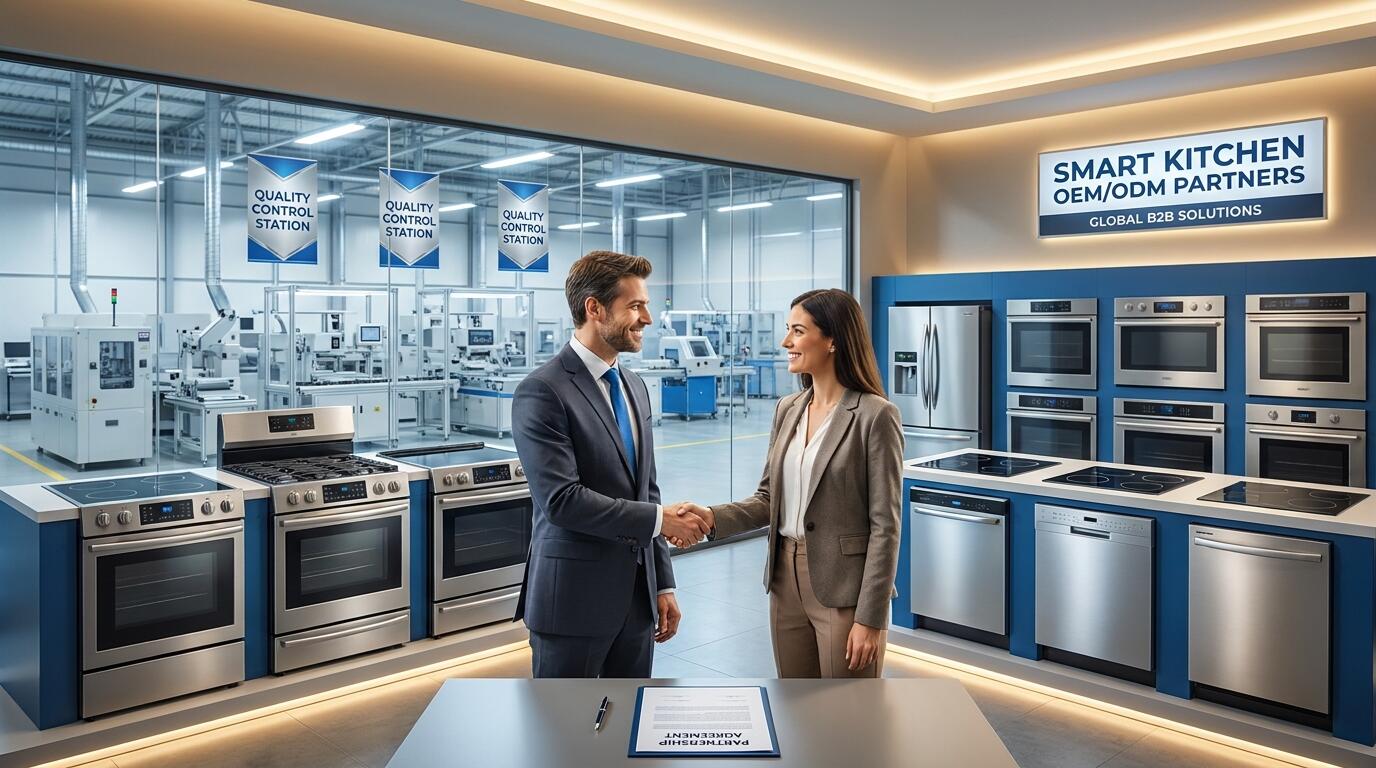
From First Sample to Full-Scale Supply: How Hyxion Builds Lasting B2B Partnerships
The question most procurement managers ask when evaluating a new manufacturing partner is not simply "Can you make this product?" — it is "What happens after the first order?" The difference between a supplier that delivers once and a manufacturing partner that grows with your business over years is exactly what separates sustainable sourcing from costly trial-and-error. For global B2B buyers in the kitchen appliance industry, the answer to that question defines everything from product consistency to margin stability to brand reputation.
Hyxion is a China-based OEM/ODM manufacturer specializing in smart kitchen appliances — including ranges, ovens, cooktops, rangetops, dishwashers, and outdoor kitchen cabinets — that delivers factory-direct solutions to global B2B partners seeking quality and customization at scale. This article examines, in direct comparison, the two realities that buyers regularly encounter when sourcing from China: working with a transactional supplier versus partnering with a structurally committed manufacturer like Hyxion. The goal is to help procurement managers and sourcing specialists understand the concrete differences across every phase of the relationship, from initial inquiry through mature, multi-year supply.
Why the Partnership Model Matters More Than the Product Catalog
The most common mistake B2B buyers make when sourcing kitchen appliances from overseas manufacturers is evaluating only the first transaction — sample quality, unit pricing, and lead time — while underweighting everything that determines value over a two- or three-year supply cycle.
During a long-term sourcing relationship, buyers may encounter changes in MOQ requirements, component availability, quality management arrangements, or communication processes. These factors vary by manufacturer and project. Evaluating supplier capabilities, production arrangements, and after-sales responsibilities before placing repeat orders can help buyers manage potential sourcing risks. At this stage, changing suppliers may involve additional costs related to tooling arrangements, product validation, branding updates, inventory management, and supplier qualification. The overall impact depends on the existing agreements, product configuration, and transition requirements.
This comparison evaluates two distinct sourcing models against six criteria that reflect real B2B risk:
- Onboarding and sampling support — how effectively the manufacturer bridges the gap between buyer intent and first physical product
- Customization depth — the degree to which products can be adapted to brand specifications, market regulations, and end-user expectations
- Quality assurance infrastructure — the systems and processes in place to maintain consistency across batches and years
- Responsiveness and communication — the speed and substance of responses at every stage of the relationship
- Scalability — the manufacturer's operational capacity and willingness to grow order volumes without degrading service
- Long-term partnership commitment — structural evidence that the manufacturer is invested in the buyer's business success, not just the current PO
These criteria matter because each one corresponds to a category of real commercial risk. Weak onboarding produces delayed market entry. Shallow customization limits brand differentiation. Inconsistent quality generates returns, warranty claims, and retailer delistings. Poor communication inflates project management costs and creates compliance gaps. Insufficient scalability forces disruptive supplier switches at the worst possible moments.
Two Models, One Choice: Transactional Supplier vs. Committed Manufacturing Partner
The Transactional Supplier Model
A transactional sourcing arrangement generally focuses on individual purchase orders, with the scope of technical support, customization, and after-sales services defined by the supplier's business model and contractual commitments. Manufacturers, trading companies, and other sourcing providers may offer different levels of support, so buyers should assess each supplier based on its actual capabilities and responsibilities. The level of customization, technical assistance, and customer service available under a transactional sourcing arrangement varies by supplier. Buyers should clarify service scope, communication channels, order-volume requirements, and after-sales responsibilities before entering into an agreement.
For standard or near-standard products, a transactional supplier may adequately fulfill initial purchase orders. However, when buyers need to iterate on specifications, pursue market-specific certifications, or scale order volumes quickly, outcomes depend heavily on the supplier's engineering capabilities, available production capacity, and agreed contractual scope. The extent of product development support in a transactional sourcing arrangement depends on the supplier's service model, available technical resources, and the scope agreed upon by both parties. Buyers requiring ongoing product development should clarify engineering responsibilities, technical support arrangements, and long-term cooperation expectations in advance.
This model is not inherently dishonest; it is simply misaligned with the needs of buyers who plan to build a branded product line or a sustained import business around kitchen appliances.
The Committed Manufacturing Partner: The Hyxion Approach
A manufacturing partner may offer OEM/ODM services, technical assistance, and commercial coordination throughout different stages of a sourcing relationship. The actual level of support depends on the manufacturer's in-house resources, production capabilities, service arrangements, and the requirements agreed upon with each buyer.
Hyxion exemplifies this model. As a manufacturer of ranges, ovens, cooktops, rangetops, dishwashers, and outdoor kitchen cabinets, Hyxion works with global B2B buyers, including importers, distributors, and retail brands, on kitchen appliance sourcing and manufacturing projects. Depending on product specifications and project requirements, its OEM/ODM services may include product customization, production coordination, and quality management support.
The practical difference becomes visible immediately at the onboarding stage. During the initial consultation, buyers can discuss their target markets, customer profiles, applicable regulatory requirements, and brand positioning with the Hyxion team. These details can help inform product specifications and identify relevant customization requirements before development begins. This upstream investment in understanding the buyer's context is what distinguishes a genuine OEM/ODM partner from a factory that simply takes orders.
Throughout the product development phase, Hyxion's engineering and design teams work collaboratively with buyers to translate brand requirements into manufacturable specifications. Depending on the selected product platform and technical feasibility, customization options may include product dimensions, finishes, feature configurations, and control interfaces. Available options should be confirmed for each model during the product development and specification review process. The process is iterative, with structured sample review and revision cycles that give buyers confidence before committing to production tooling and inventory.
Head-to-Head Comparison: Transactional Supplier vs. Hyxion Partnership
| Criterion | Transactional Supplier | Hyxion Partnership Model |
|---|---|---|
| Onboarding & Sampling | Support may focus on available catalog products and standard sample requests, depending on the supplier's service scope. | Buyers can discuss product specifications and sample requirements with Hyxion, with revision arrangements confirmed according to the project scope. |
| Customization Depth | Customization options depend on the supplier's manufacturing resources, existing product platforms, and project requirements. | Hyxion offers OEM/ODM customization discussions covering product specifications, features, finishes, and other model-dependent requirements, subject to technical feasibility and applicable market requirements. |
| Quality Assurance | Inspection arrangements and quality control procedures vary by supplier and should be verified through documented processes. | Hyxion's quality management arrangements may include in-process and final inspections, with inspection scope and acceptance criteria defined according to product requirements. |
| Responsiveness | Communication channels and response arrangements depend on the supplier's service structure and contractual commitments. | Hyxion provides B2B communication and project coordination, with contact arrangements and support scope confirmed during cooperation. |
| Scalability | Production capacity and scheduling depend on available resources, order volume, and agreed production arrangements. | Production planning and potential volume adjustments can be discussed with Hyxion based on forecast demand, available capacity, and project requirements. |
| Long-Term Commitment | Long-term cooperation arrangements depend on the supplier's service model and the terms agreed by both parties. | Long-term cooperation can be developed through ongoing communication, product planning, and mutually agreed supply arrangements. |
The comparison table above highlights the structural differences between the two models: while a transactional arrangement typically centers on point-of-sale terms such as initial unit price and standard delivery, long-term supply outcomes depend on a supplier's technical capabilities, quality systems, and contractual commitments across the full supply cycle
For buyers planning to build a branded kitchen appliance line or establish a long-term import business, maintaining consistent product quality is essential. Variations between production batches may contribute to customer complaints, product returns, warranty claims, and retailer concerns. Clearly defined inspection procedures and quality acceptance criteria can help buyers assess product quality at different stages of manufacturing. Manufacturers should also maintain documented quality management procedures to support production consistency and identify potential issues. When evaluating a manufacturer's quality management capabilities, buyers should review inspection records, quality acceptance criteria, and corrective action procedures.
The scalability dimension deserves equal attention. As order volumes grow, a supplier's ability to accommodate increased demand depends on its overall production capacity, resource allocation, and contractual scheduling terms, particularly during peak demand periods. Hyxion can discuss anticipated order volumes and production schedules with buyers as part of ongoing supply planning. Sharing demand forecasts in advance may help both parties evaluate capacity requirements and coordinate production arrangements. Actual scheduling remains subject to available capacity, component supply, order confirmation, and production conditions.
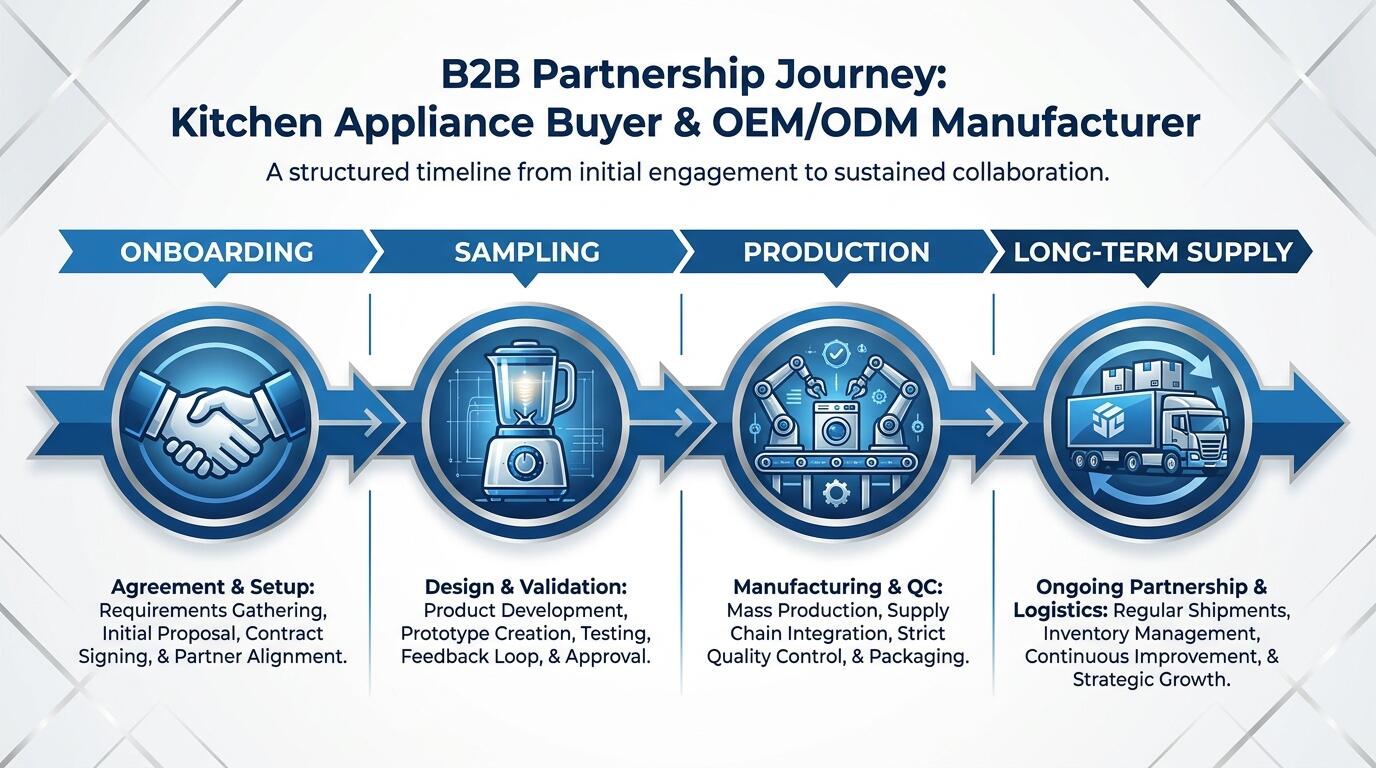
ALT: B2B kitchen appliance buyer and Hyxion OEM ODM manufacturer collaborating through onboarding, sampling, production, and long-term supply phases
Which Sourcing Model Should You Choose? Scenario-Based Guidance
Choosing between a transactional supplier and a committed manufacturing partner like Hyxion depends on the buyer's strategic intent, product complexity, and market timeline. The following scenarios map real buyer situations to the most appropriate model.
If you are placing a one-time order for a standard, catalog-specification product with no brand customization requirements, a transactional supplier may be operationally sufficient. The risks are manageable when customization depth, quality consistency across batches, and long-term scalability are not factors.
If you are building or expanding a branded kitchen appliance product line, supplier evaluation should extend beyond initial pricing. Consider customization requirements, documented quality procedures, technical support, and production capacity when determining whether a transactional sourcing arrangement or a longer-term manufacturing partnership is more suitable.
If your products must meet market-specific regulatory requirements—such as UL, CE, CSA, or other applicable certifications and compliance requirements, which should be verified based on your destination market and specific product models—you need a manufacturer with the engineering capability to build compliance into the product specification from the outset, not retrofit it after production.
If you have experienced quality or communication challenges with a previous supplier, reviewing the manufacturer's quality procedures, technical support arrangements, and project communication processes can help identify a more suitable sourcing partner. Hyxion's OEM/ODM services provide an opportunity to discuss these requirements as part of a new manufacturing project. Switching manufacturing partners may involve additional onboarding, sampling, product validation, and coordination costs. Buyers should compare these transition requirements with the expected benefits of the new supplier's capabilities, quality arrangements, and service scope before making a decision.
Potential advantages of the Hyxion partnership model include product customization discussions, structured project coordination, quality management support, production planning, and opportunities for ongoing cooperation. The specific services and arrangements depend on the selected product and agreed project scope.
Cons to weigh honestly: a customized manufacturing partnership may require additional upfront time for specification development, technical discussions, sampling, and project coordination compared with purchasing a standard catalog product. The level of engagement depends on the customization scope and project complexity. For buyers without clear brand requirements or volume commitments, this level of engagement may feel disproportionate to the initial order size.
Questions & Answers
Q1: How does Hyxion handle product customization for buyers who are new to OEM/ODM manufacturing?
Hyxion approaches new OEM/ODM partners with a structured onboarding process that begins with understanding the buyer's market context, regulatory environment, and brand requirements before any specification is finalized. For buyers unfamiliar with the OEM/ODM process, Hyxion's engineering and commercial teams can discuss technical feasibility, potential tooling and sampling requirements, and the sequence of product development activities. Actual costs and timelines depend on the product specifications, customization scope, component availability, and applicable testing requirements.
Q2: Are Hyxion's quality standards consistently applied across repeat orders, not just the first production run?
Maintaining product consistency across repeat orders requires documented specifications, defined quality acceptance criteria, and ongoing inspection procedures. Hyxion's quality management arrangements should be evaluated through the applicable inspection processes, production records, and agreed product requirements. Buyers can also clarify how quality issues and corrective actions are handled under the manufacturing agreement. Hyxion's quality assurance infrastructure is designed to prevent this through in-line and final inspection processes applied consistently across all production runs, not only when a buyer's representative is present. This structural commitment to consistent quality is a defining characteristic of a genuine manufacturing partnership.
Q3: How long does it typically take to move from initial inquiry to first production shipment with Hyxion?
The timeline from first inquiry to production shipment varies based on the complexity of customization required, the product category, and the buyer's readiness to provide brand specifications. The timeline from initial inquiry to first production shipment depends on the product category, customization scope, tooling requirements, sample approval process, applicable testing or certification, component availability, and production arrangements. Buyers should establish a project-specific schedule with the manufacturer, covering specification confirmation, sampling, validation, mass production, inspection, and shipment preparation. No universal development timeframe applies to every OEM/ODM project. Clarifying product specifications and identifying applicable regulatory requirements early in the project may help reduce avoidable revisions and coordination issues. Actual development and approval timelines remain subject to product complexity, testing requirements, and external review processes.
Final Thoughts
The decision to work with a committed manufacturing partner rather than a transactional supplier is ultimately a strategic one — it reflects how seriously a buyer takes the long-term integrity of their product line and their brand's market position.
Focusing exclusively on the lowest initial purchase price may leave other sourcing considerations insufficiently evaluated. Buyers should also assess product quality requirements, supplier capabilities, compliance responsibilities, production arrangements, and potential transition costs when comparing long-term sourcing options. Establishing a well-defined manufacturing relationship can provide a framework for coordinating future product development, supply planning, and potential market expansion. The outcomes depend on the manufacturer's capabilities, commercial arrangements, product performance, and the buyer's broader business strategy.
Key Takeaways:
- While initial purchase orders for standard products may appear similar across different sourcing models, long-term outcomes vary depending on each supplier's engineering capabilities, quality infrastructure, and agreed contractual commitments.
- Customization depth, quality consistency, and scalability are the three criteria that most reliably predict long-term sourcing success in the kitchen appliance category.
- Hyxion offers OEM/ODM services for kitchen appliance categories including ranges, ovens, cooktops, rangetops, dishwashers, and outdoor kitchen cabinets. Buyers can discuss product requirements, customization options, and potential supply arrangements with the team based on their specific projects.
- Compliance requirements should be treated as a design input, not an afterthought — and your manufacturing partner should have the engineering capability to address them proactively.
- A structured manufacturing partnership may help buyers coordinate product specifications, sampling, quality requirements, and ongoing supply arrangements. Its total cost of ownership should be evaluated against actual purchase prices, development expenses, quality performance, logistics, and after-sales requirements.
If you are evaluating manufacturing partners for your next kitchen appliance sourcing program, the logical next step is to begin a structured conversation about your product requirements, market, and growth plans — exactly the kind of conversation Hyxion's B2B partnership team is designed to support.
Ready to move from first order to long-term supply with a manufacturing partner built for your growth? Visit the Hyxion website to explore product catalogs, request a custom quote, or connect directly with the B2B partnership team.
References
- International Organization for Standardization (ISO). "Quality Management Systems and Standards."
https://www.iso.org/ - International Electrotechnical Commission (IEC). "International Standards for Electrical and Electronic Equipment."
https://www.iec.ch/ - U.S. Consumer Product Safety Commission (CPSC). "Consumer Product Safety Standards and Compliance."
https://www.cpsc.gov/ - World Trade Organization (WTO). "Technical Barriers to Trade and Product Standards in International Commerce."
https://www.wto.org/ - Underwriters Laboratories (UL). "Safety Certification and Standards for Appliances and Equipment."
https://www.ul.com/
Note: Standards may be updated; please check the latest official documents or consult professional advisors.